1. What is Sawdust Charcoal?
Sawdust Charcoal is a type of biomass charcoal produced from compressed sawdust, wood shavings, and other wood-processing residues. Instead of cutting down trees specifically for charcoal production, manufacturers recycle waste materials from furniture factories, sawmills, and woodworking industries.
The raw materials are first compressed into briquettes under high pressure and then carbonized in a kiln at high temperatures. The final product becomes a dense, smokeless charcoal with high heat output and long burning time.
Sawdust charcoal is widely known for its:
Low smoke emission
Stable heat performance
Long burning duration
Environmentally friendly production process
Uniform shape and size
In Vietnam, sawdust charcoal is commonly produced in hexagonal or cylindrical forms with a center hole that improves airflow and combustion efficiency.
2. Applications of Sawdust Charcoal
BBQ Charcoal made from sawdust has become increasingly popular across international markets due to its versatility and clean-burning characteristics.
BBQ and Restaurant Use
One of the largest applications is barbecue cooking. Restaurants and BBQ chains prefer sawdust charcoal because it:
Produces steady heat
Burns longer than traditional lump charcoal
Generates less smoke and sparks
Enhances cooking efficiency
Countries in the Middle East, Europe, Japan, and South Korea import large volumes of Vietnamese sawdust charcoal for grilling purposes.
Shisha and Hookah Industry

High-quality compressed charcoal is also used in the hookah and shisha market. Premium-grade products are appreciated for:
Odorless burning
Minimal ash production
Consistent heat release
Long-lasting performance
Household Heating
In some colder regions, sawdust charcoal is used for indoor or outdoor heating because of its high calorific value and stable combustion.
Industrial Fuel
Certain factories and small industries use biomass charcoal as an alternative fuel source to reduce dependence on coal and fossil fuels.
3. The Value of Sawdust Charcoal
Environmental Value
Sawdust charcoal helps reduce wood waste from the timber and furniture industries. Instead of discarding sawdust or burning it openly, manufacturers recycle these by-products into valuable fuel products.
This contributes to:
Waste reduction
Lower environmental pollution
Reduced deforestation pressure
Better utilization of biomass resources
Compared with traditional charcoal production, sawdust charcoal manufacturing is considered more sustainable because it maximizes the use of existing wood residues.
Economic Value
Vietnam is one of the world's major furniture manufacturing hubs. As a result, the country has abundant raw material sources for sawdust charcoal production.
This creates:
Additional income for wood-processing industries
Employment opportunities in rural areas
Strong export potential
Higher value-added utilization of biomass waste
Energy Efficiency
Sawdust charcoal usually has:
High fixed carbon content
Low moisture
High density
Long burning duration
These characteristics make it more energy-efficient than many conventional charcoal products.
4. Detailed Production Process of Sawdust Charcoal in Vietnam
Vietnam has developed a relatively advanced and specialized production system for sawdust charcoal, especially in provinces with strong woodworking industries such as Hai Phong, Ninh Binh, Ha Noi, Binh Duong, Dong Nai, and Quy Nhon.
The production process generally includes the following stages:
Step 1: Raw Material Collection
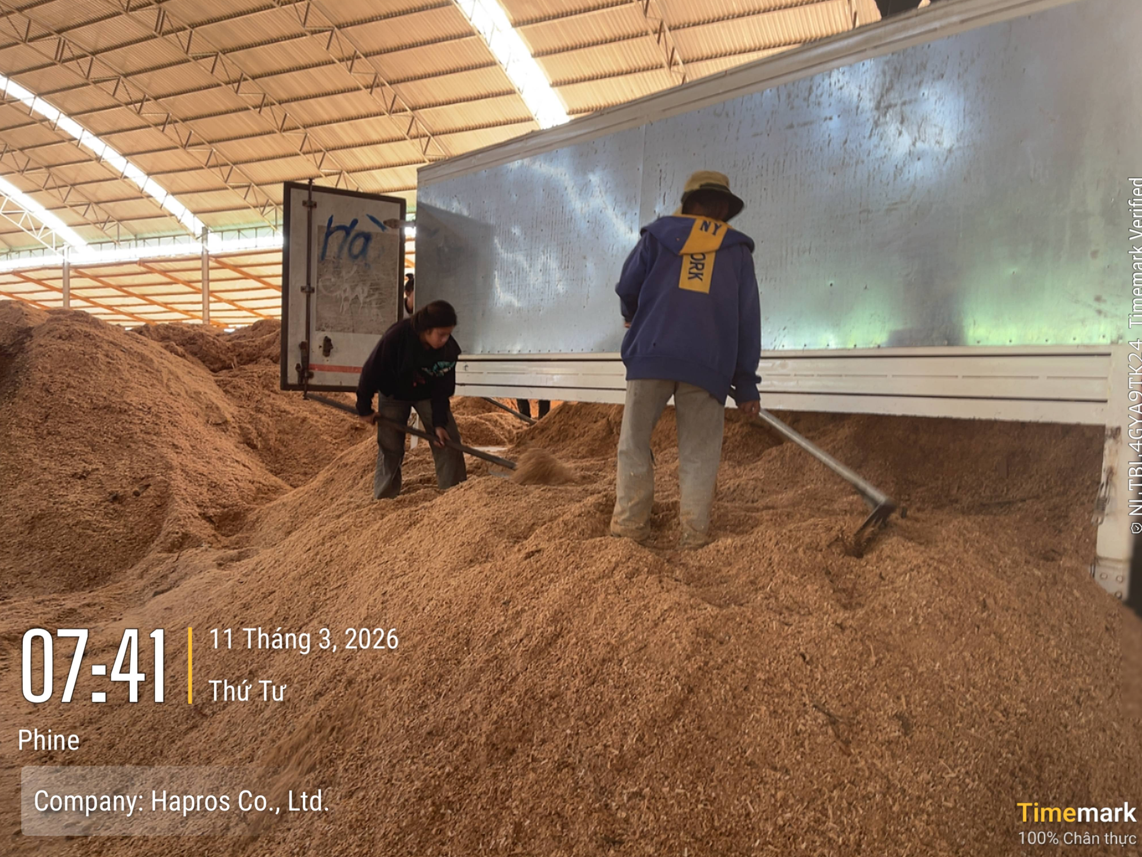
The primary raw materials include:
Sawdust
Wood shavings
Wood chips
Wood powder from furniture factories
Manufacturers usually prefer hardwood residues because they produce stronger briquettes and higher-quality charcoal.
The raw material must be:
Clean
Free from chemicals
Free from paint or glue contamination
Uniform in particle size
This stage is extremely important because raw material quality directly affects the final charcoal quality.
Step 2: Drying Process
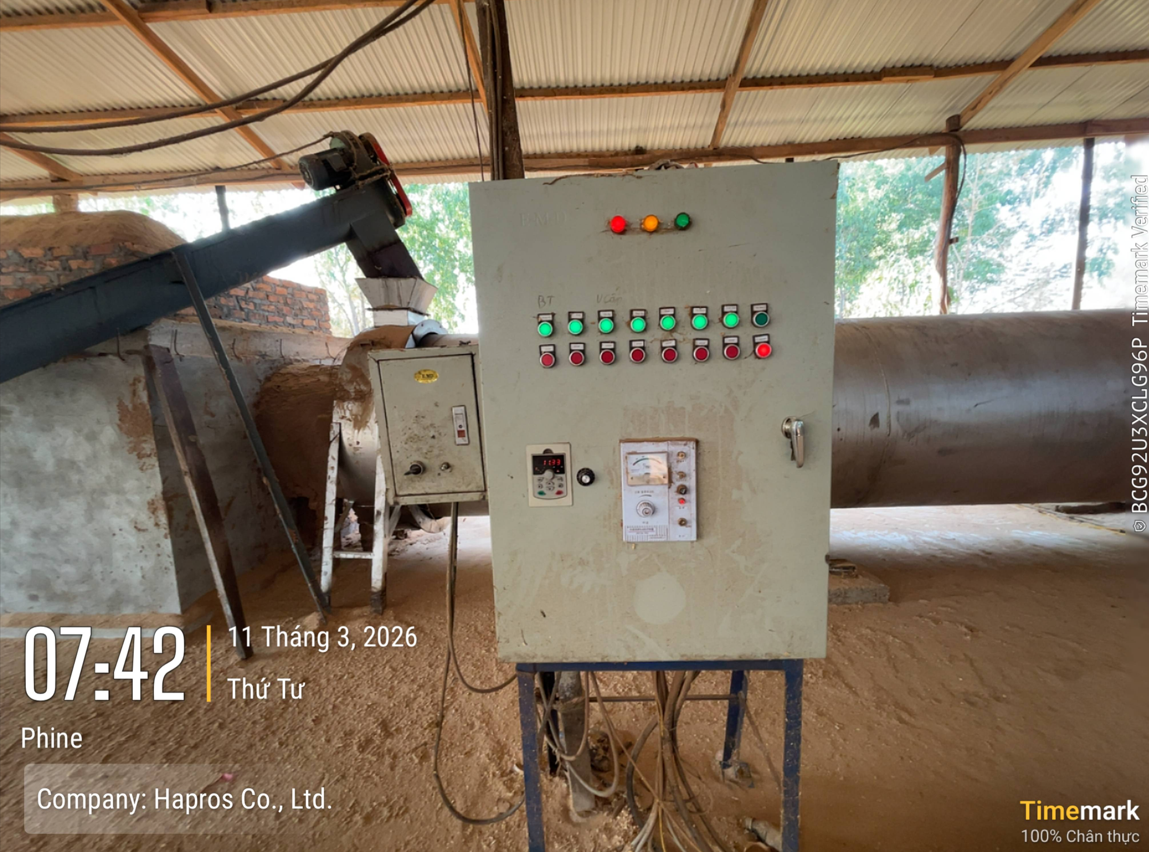
Fresh sawdust often contains high moisture content, sometimes above 30–40%.
Before briquetting, the moisture level must typically be reduced to around 8–12%.
Vietnamese factories commonly use:
Rotary dryers
Hot air drying systems
Biomass-fired drying furnaces
Proper drying is essential because excessive moisture can:
Reduce briquette strength
Cause cracks during carbonization
Lower heat efficiency
After drying, the sawdust becomes lighter and more suitable for compression.
You may want to read: Why Does Cyclone System Matter for Sawdust Charcoal Quality?
Step 3: Briquetting Process
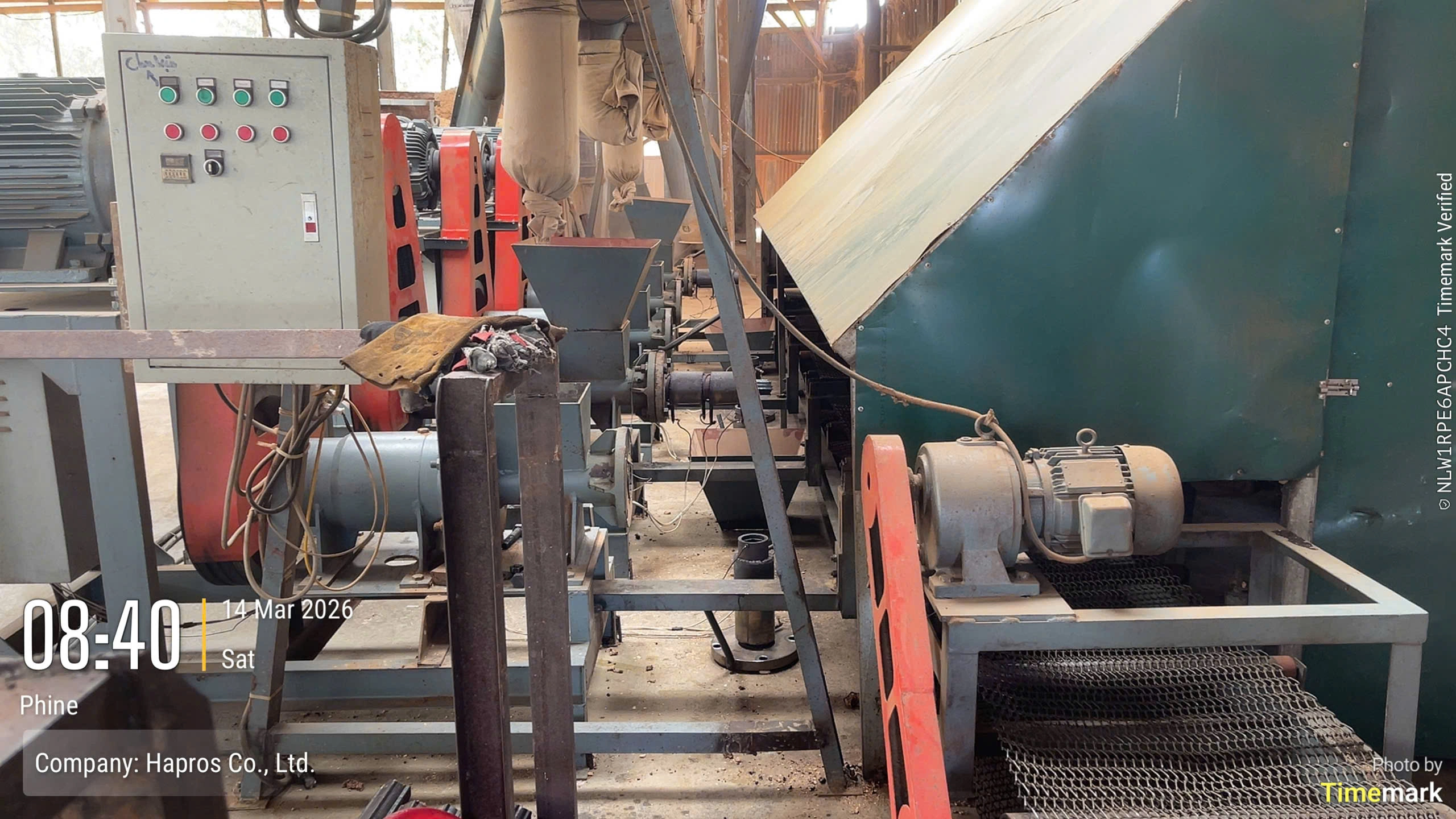
The dried sawdust is fed into a briquette machine under extremely high pressure.
During compression:
No chemical binders are required
Natural lignin inside the wood acts as a binder
Heat generated from pressure softens the lignin
The machine compresses the sawdust into:
Hexagonal briquettes
Cylindrical sticks
Square briquettes
Most Vietnamese factories produce hexagonal briquettes with a center hole to improve oxygen flow and combustion.
The briquettes produced at this stage are often called:
Biomass briquettes
Sawdust briquettes
White charcoal sticks (before carbonization)
Step 4: Cooling and Dry Stabilization
Freshly pressed briquettes are still hot and relatively fragile.
They are cooled naturally or through ventilation systems to:
Prevent deformation
Improve structural stability
Reduce cracking risks
The briquettes may also undergo additional drying before entering the carbonization stage.
Step 5: Carbonization Process
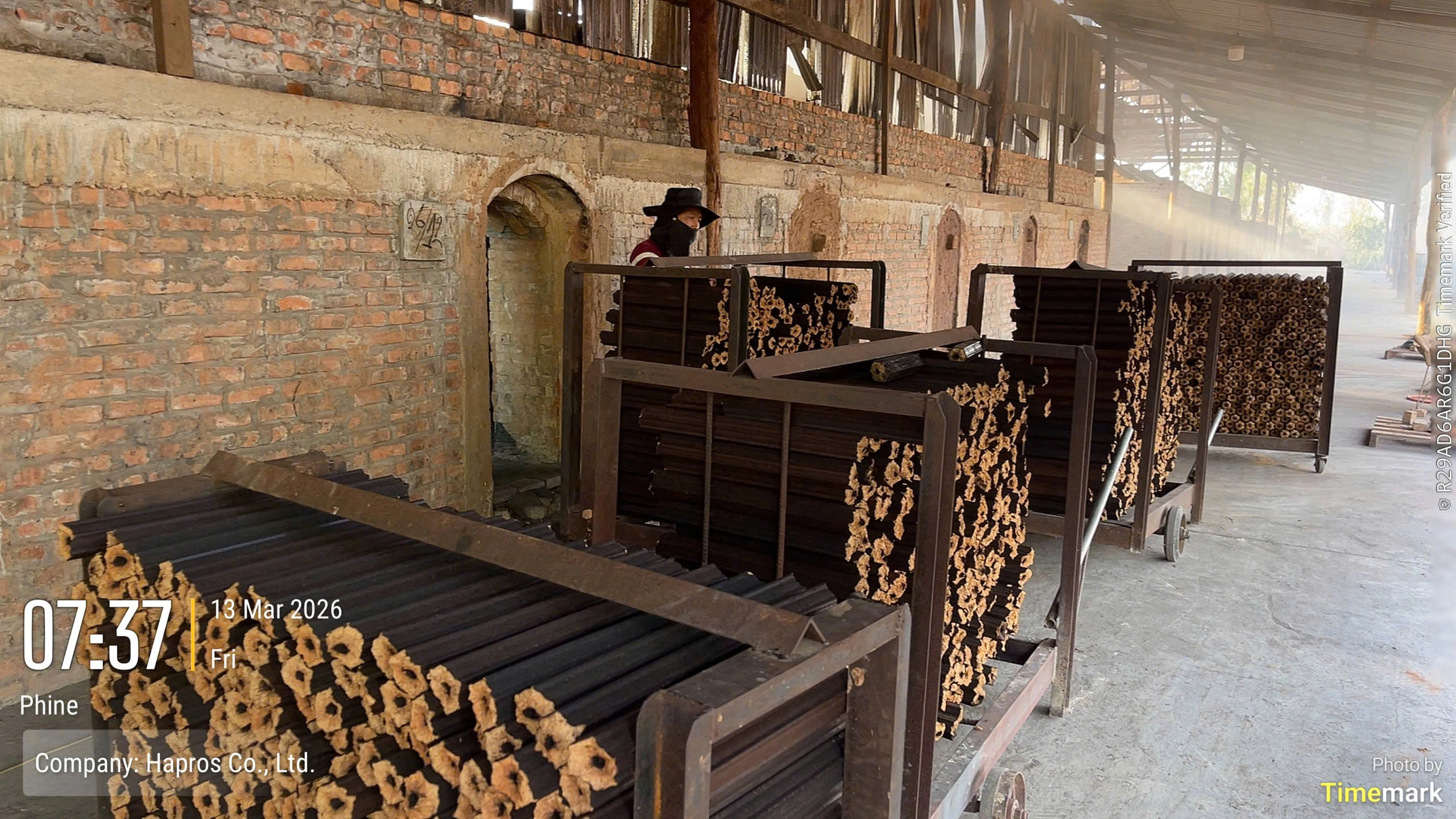
This is the most critical stage of the entire production process.
The briquettes are placed inside carbonization kilns and heated under controlled oxygen conditions.
Vietnamese factories commonly use:
Traditional brick kilns
Semi-automatic carbonization kilns
Continuous carbonization systems
The carbonization temperature usually ranges from:
600°C to 900°C
During this process:
Moisture evaporates
Volatile substances are removed
Carbon concentration increases
The briquettes turn black and become charcoal
The process may take:
5 to 15 days depending on kiln technology and product grade
Proper carbonization determines:
Burning time
Ash content
Fixed carbon level
Mechanical strength
Smoke emission quality
Experienced kiln operators are highly valued in Vietnam because temperature control significantly impacts final quality.
Step 6: Cooling Period
After carbonization, the charcoal cannot be exposed immediately to oxygen because it may ignite spontaneously.
Factories therefore allow the kiln to cool gradually for several days.
This stage ensures:
Product stability
Safety
Better hardness
Reduced breakage
Step 7: Sorting and Quality Inspection
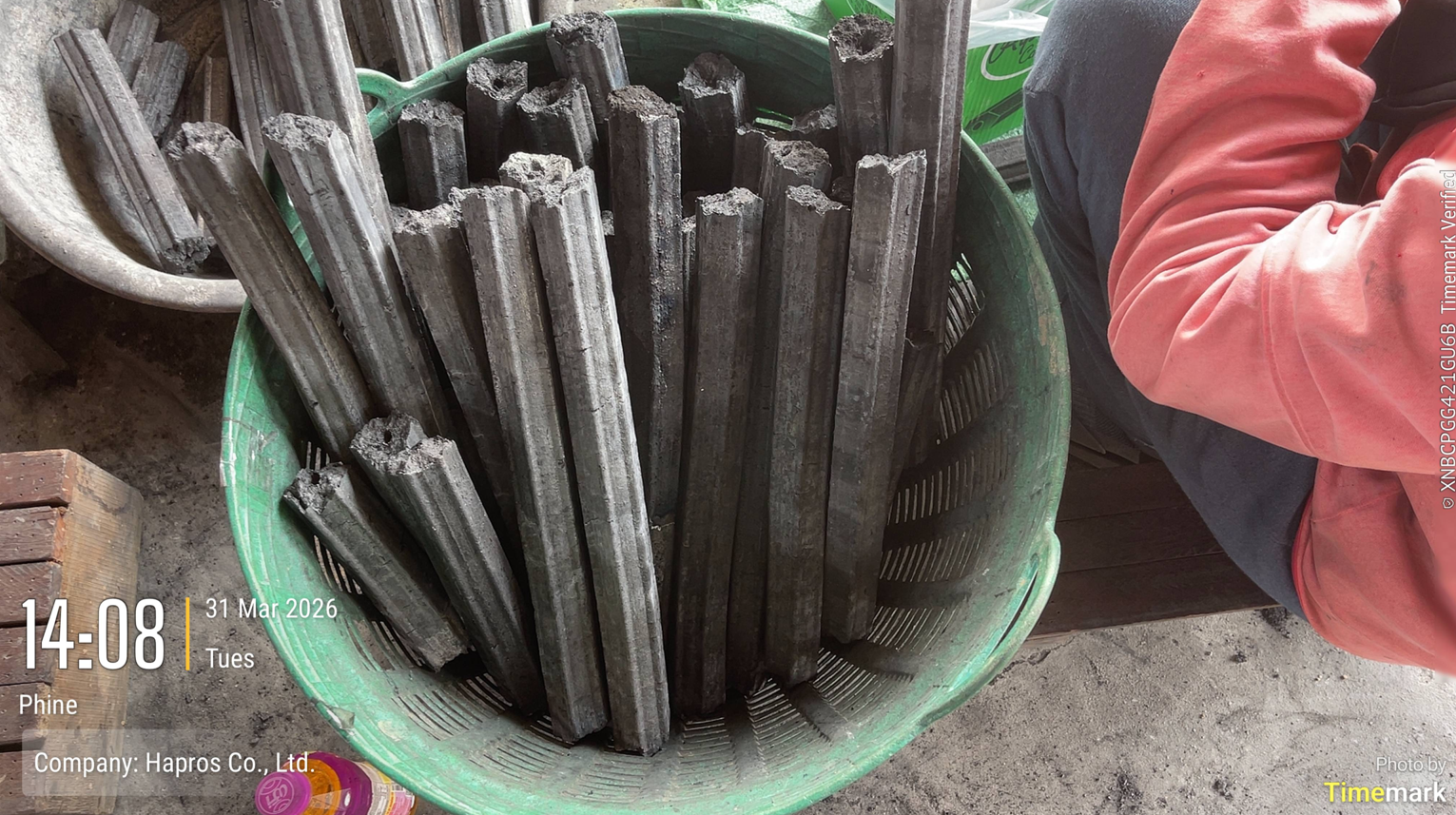
Workers manually inspect the charcoal to remove:
Broken pieces
Cracked products
Under-carbonized items
Excessive ash products
Quality inspection usually includes checking:
Fixed carbon content
Moisture level
Ash percentage
Burning duration
Shape consistency
Export-grade Vietnamese sawdust charcoal often requires:
Low ash content
Long burning time
High hardness
Minimal smoke and odor
Step 8: Packaging
Caption
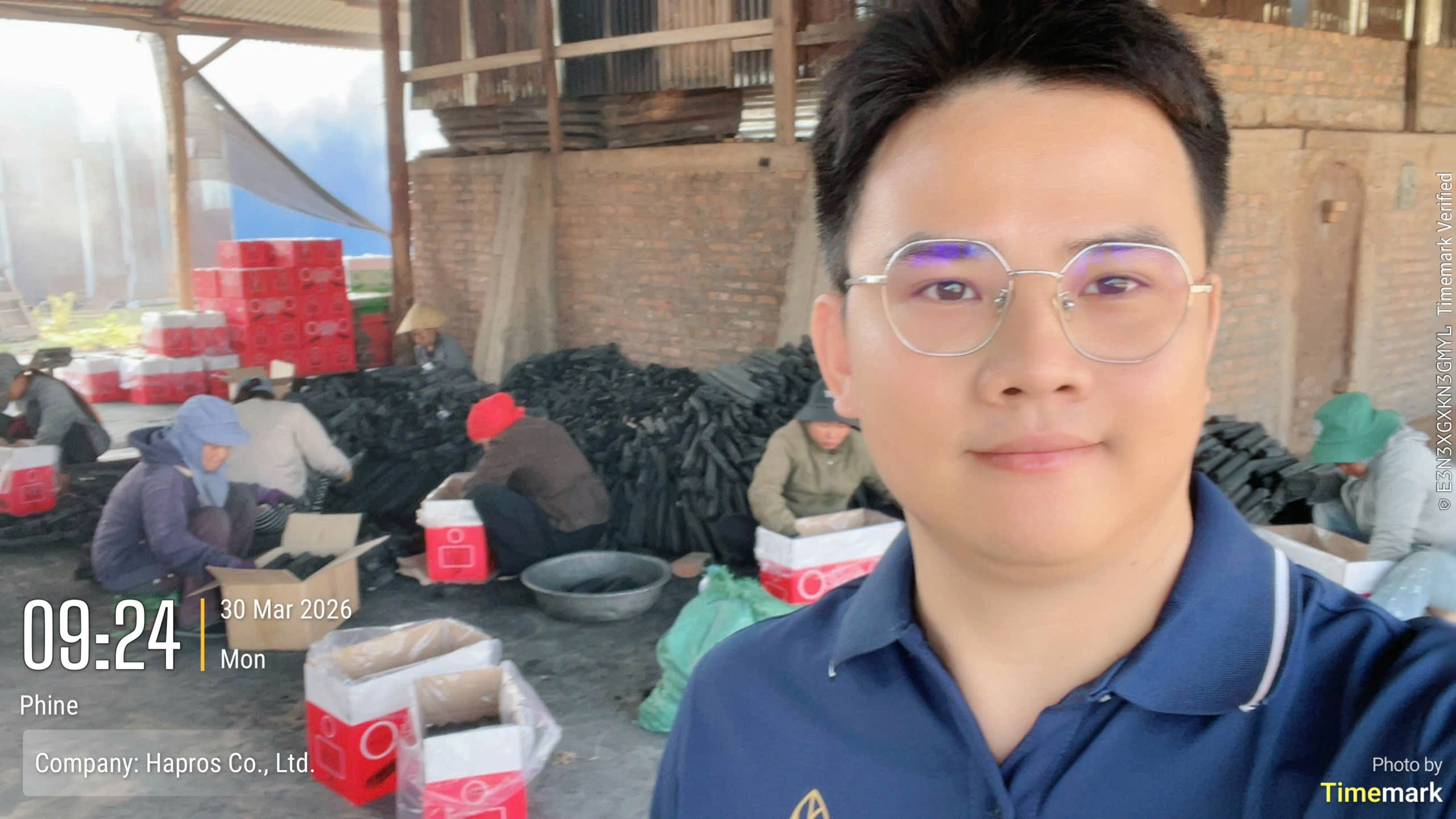
The charcoal is packed according to customer requirements.
Common packaging methods include:
Carton boxes
Master cartons
Plastic bags
Kraft paper bags
Export packaging often includes:
Moisture protection
Palletization
Container fumigation preparation
Barcode and label printing
Most export containers are loaded carefully to minimize breakage during long-distance shipping.
5. Strengths of Vietnamese Sawdust Charcoal Compared with Other Countries
Vietnam has become one of the leading exporters of sawdust charcoal in Asia due to several competitive advantages.
Abundant Raw Material Supply
Vietnam possesses a massive furniture manufacturing industry, which generates a stable supply of wood residues.
This gives Vietnamese producers:
Lower raw material costs
Stable production capacity
Better scalability
Skilled Production Experience
Many Vietnamese factories have over 10–20 years of experience producing biomass charcoal for export markets.
Manufacturers understand the strict requirements of:
Japan
South Korea
Europe
Middle Eastern countries
This experience helps ensure:
Stable quality
Better customization
Consistent production standards
Competitive Pricing
Compared with producers in some neighboring countries, Vietnam offers:
Competitive labor costs
Strong logistics networks
Efficient manufacturing systems
As a result, Vietnamese charcoal often achieves a strong balance between quality and price.
High Heat and Long Burning Time
Vietnamese hardwood-based sawdust charcoal is known for:
High density
Long burning duration
Strong heat output
Low spark generation
These characteristics are especially valued in the BBQ and shisha industries.
Growing Focus on Sustainability
More Vietnamese manufacturers are investing in:
Cleaner production systems
Biomass recycling
Modern kiln technology
Eco-friendly packaging
This aligns well with the increasing global demand for sustainable fuel alternatives.
Conclusion
Vietnam has become an important global supplier of sawdust charcoal thanks to its strong woodworking industry, abundant biomass resources, and experienced manufacturing sector.
You may want to read: How to Choose a Reliable Vietnam Sawdust Charcoal Supplier
With advantages such as:
Sustainable raw materials
Long burning performance
Competitive pricing
Export-quality standards
Vietnamese sawdust charcoal continues to gain popularity across international markets.
As global demand for environmentally friendly fuel solutions increases, Vietnam is expected to strengthen its position as one of Asia’s leading biomass charcoal exporters.