Choosing the right sawdust charcoal supplier is about more than comparing prices or reading a laboratory report. Two suppliers may offer similar specifications, yet their charcoal can perform very differently in real-world use.
For importers, a simple inspection before placing an order can reduce quality risks and help ensure consistent products for customers. In this guide, we'll introduce six practical methods to evaluate Vietnam sawdust charcoal quality. Most of these tests can be completed during a factory visit or by reviewing inspection videos provided by the supplier.
1. Check the Raw Material
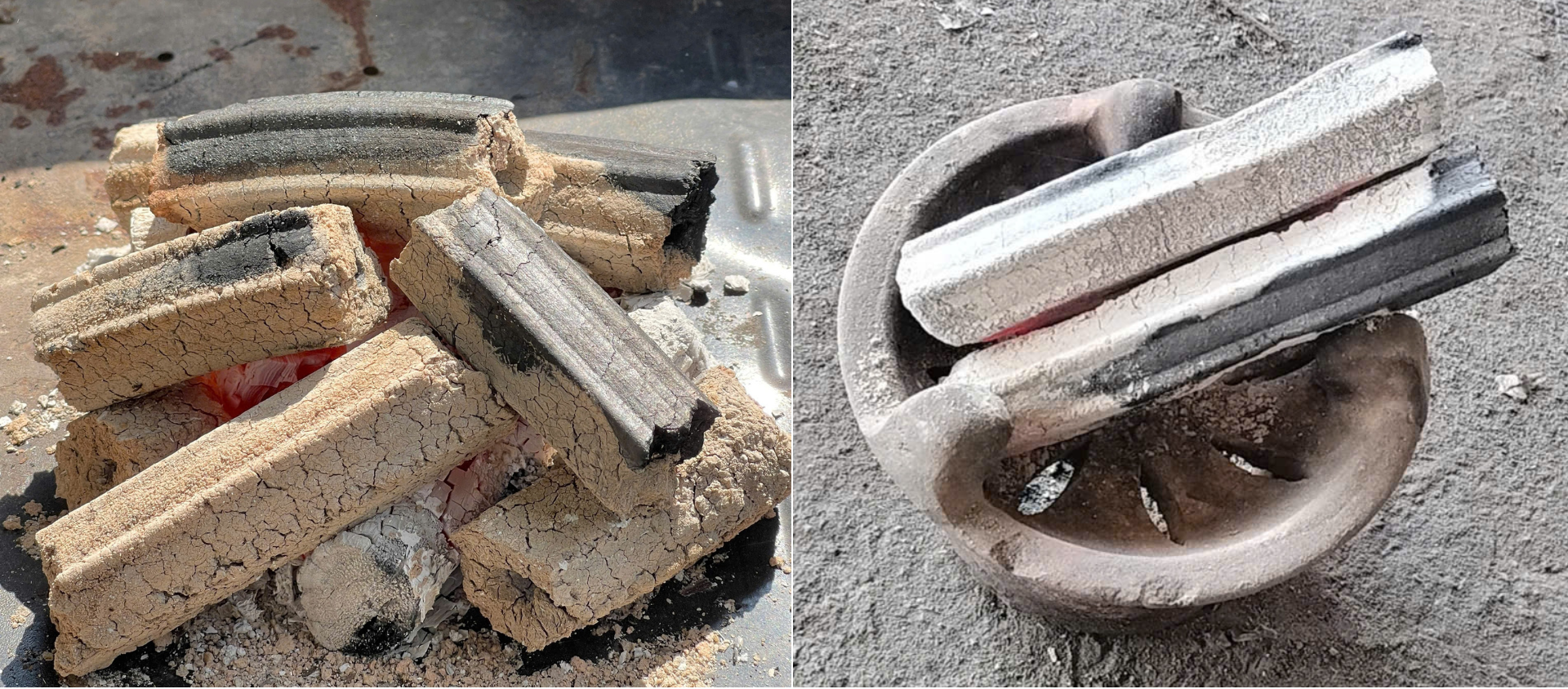
The quality of sawdust charcoal starts with the raw material.
Different wood species produce charcoal with different characteristics, including heat output, burning time, ash content, and ash color. Dense hardwoods generally produce stronger briquettes and longer-lasting heat than softwood materials.
Ask your supplier what type of sawdust is used and whether the raw material is clean and consistent. A supplier that understands and controls its raw materials is more likely to produce stable product quality over the long term.
Tip: Consistent raw materials are one of the foundations of consistent charcoal quality.
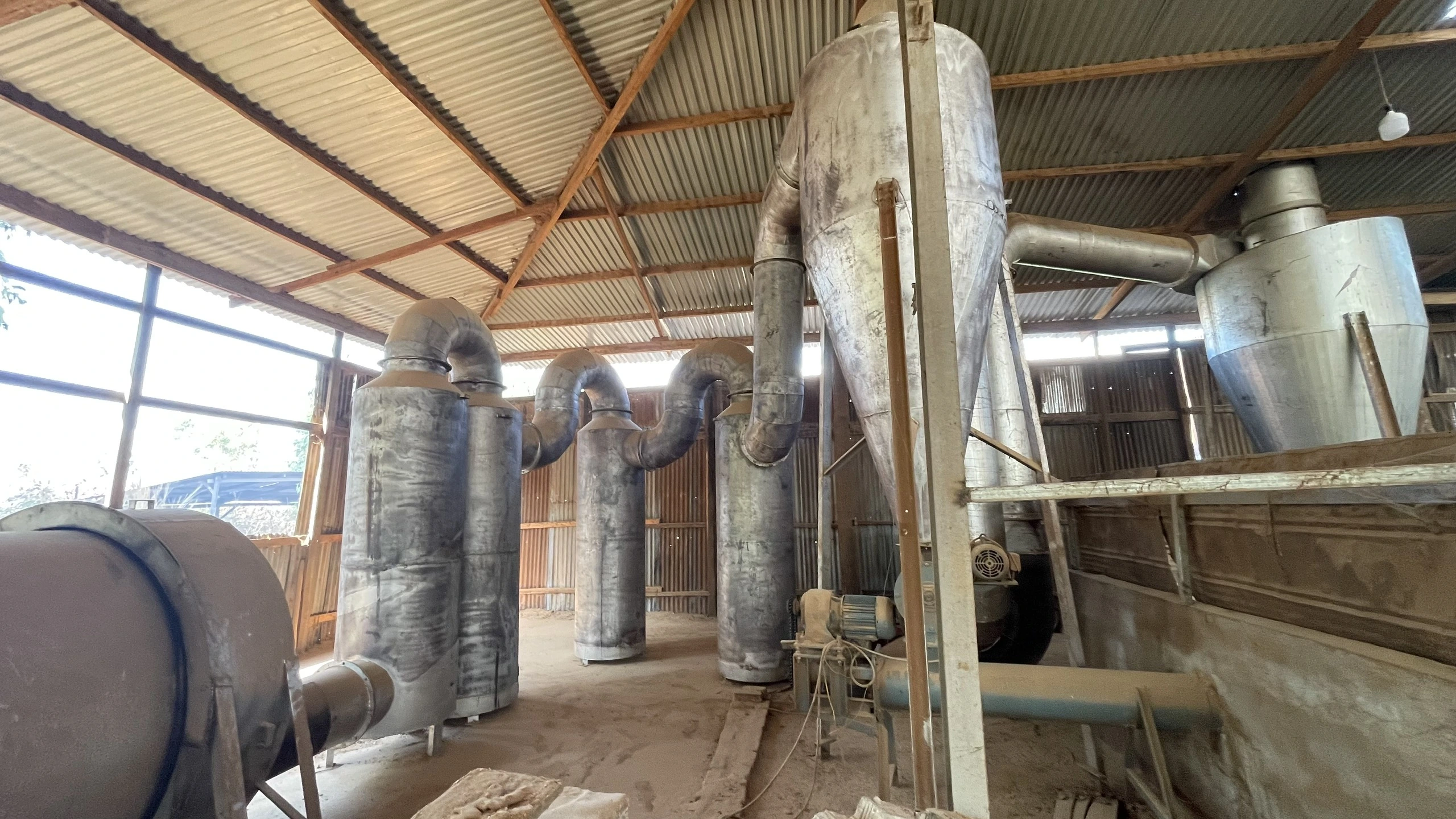
2. Inspect the Cyclone System
Even good wood can produce poor charcoal if the sawdust contains impurities.
During storage and transportation, sawdust may become mixed with sand, soil, or small stones. These contaminants remain inside the briquettes and eventually become ash after combustion.
A well-designed cyclone system removes these heavy particles before production begins. This helps reduce ash content and improves product consistency.
If possible, ask your supplier to show the raw material cleaning process or provide photos and videos of the cyclone system. It is a simple way to understand how seriously the factory controls product quality.
Learn more: Why Does Cyclone System Matter for Sawdust Charcoal Quality?
3. Perform a Drop Test
A strong charcoal briquette is less likely to break during transportation.
One of the easiest ways to evaluate durability is the 1-meter drop test.
Simply drop a charcoal briquette onto a concrete floor from approximately one meter high.
High-quality charcoal should remain largely intact, with only minor surface cracks if any. If the briquette breaks into several pieces, it may indicate insufficient density or poor manufacturing quality.
Although simple, this test gives buyers a quick indication of how well the charcoal will withstand handling and shipping.
4. Conduct a Burning Test
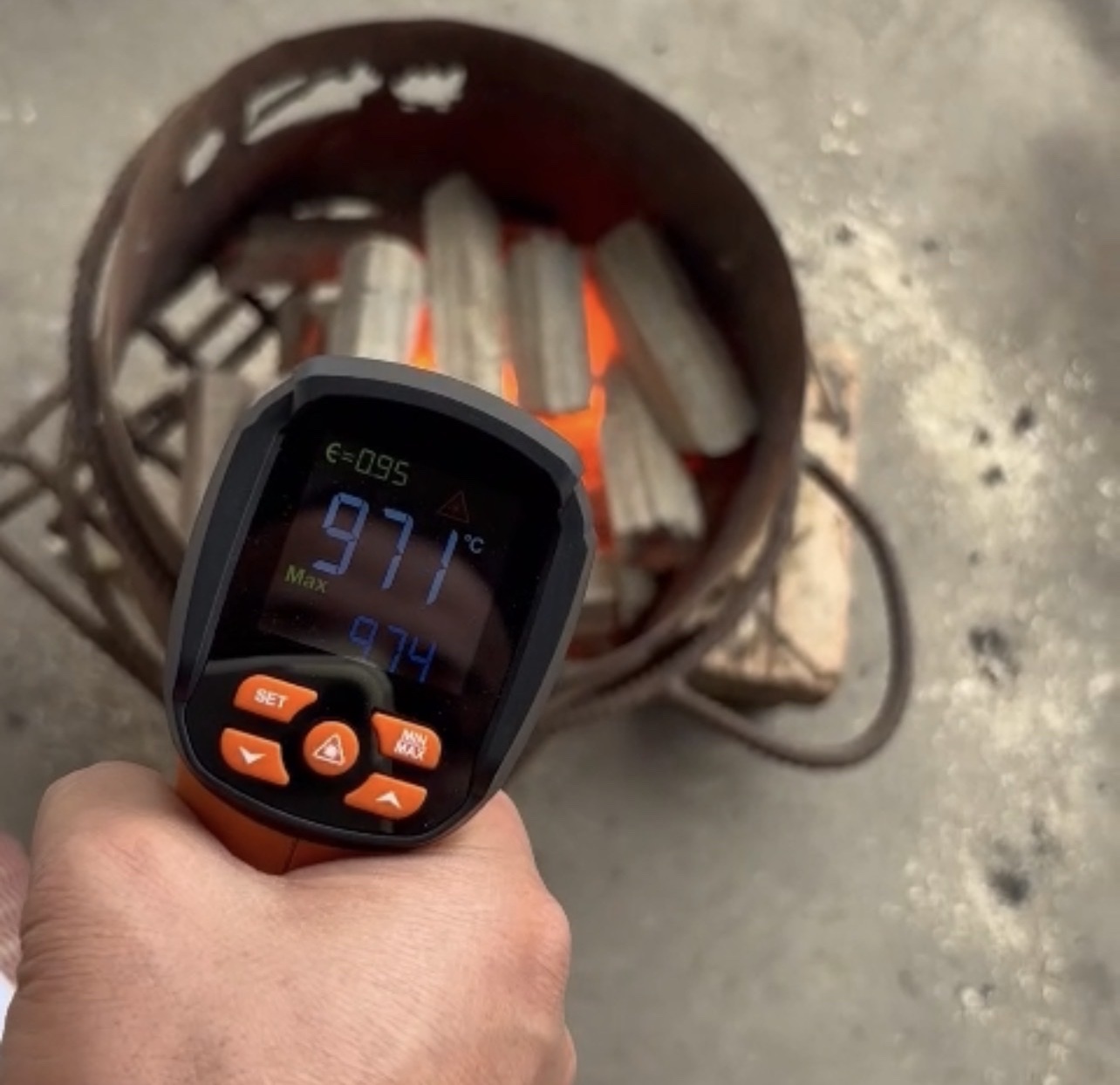
A burning test is one of the most practical ways to evaluate charcoal performance.
Instead of relying only on technical sawdust charcoal specifications, observe how the charcoal behaves during actual use.
Pay attention to the following:
➤ Heat Output: The charcoal should produce strong and stable heat throughout the burning process.
➤ Burning Time: Longer burning time means better value for restaurants and BBQ users.
➤ Ignition Time: Good charcoal should ignite within a reasonable time while maintaining its shape.
➤ Ash Quantity: Lower ash usually indicates cleaner raw materials and higher fixed carbon.
➤ Ash Color: Light gray or white ash generally suggests cleaner combustion than dark ash.
➤ Oil Drip Test: Drip a small amount of cooking oil onto the burning charcoal. High-quality charcoal should continue burning steadily without excessive flare-ups.
These simple observations provide valuable information that laboratory figures alone cannot fully demonstrate.
5. Try the LED Conductivity Test
The LED conductivity test has become a popular way to demonstrate charcoal quality.
Because carbon conducts electricity, charcoal with a higher fixed carbon content generally allows electricity to flow more easily.
During the test, a simple LED circuit is connected to the charcoal. If the charcoal has a high carbon content, the LED lights up brightly. Lower-carbon charcoal usually produces a weaker light or no light at all.
While this is not a replacement for laboratory analysis, it is an easy visual demonstration that buyers can quickly understand during a factory visit or product presentation.
6. Verify with Laboratory Analysis
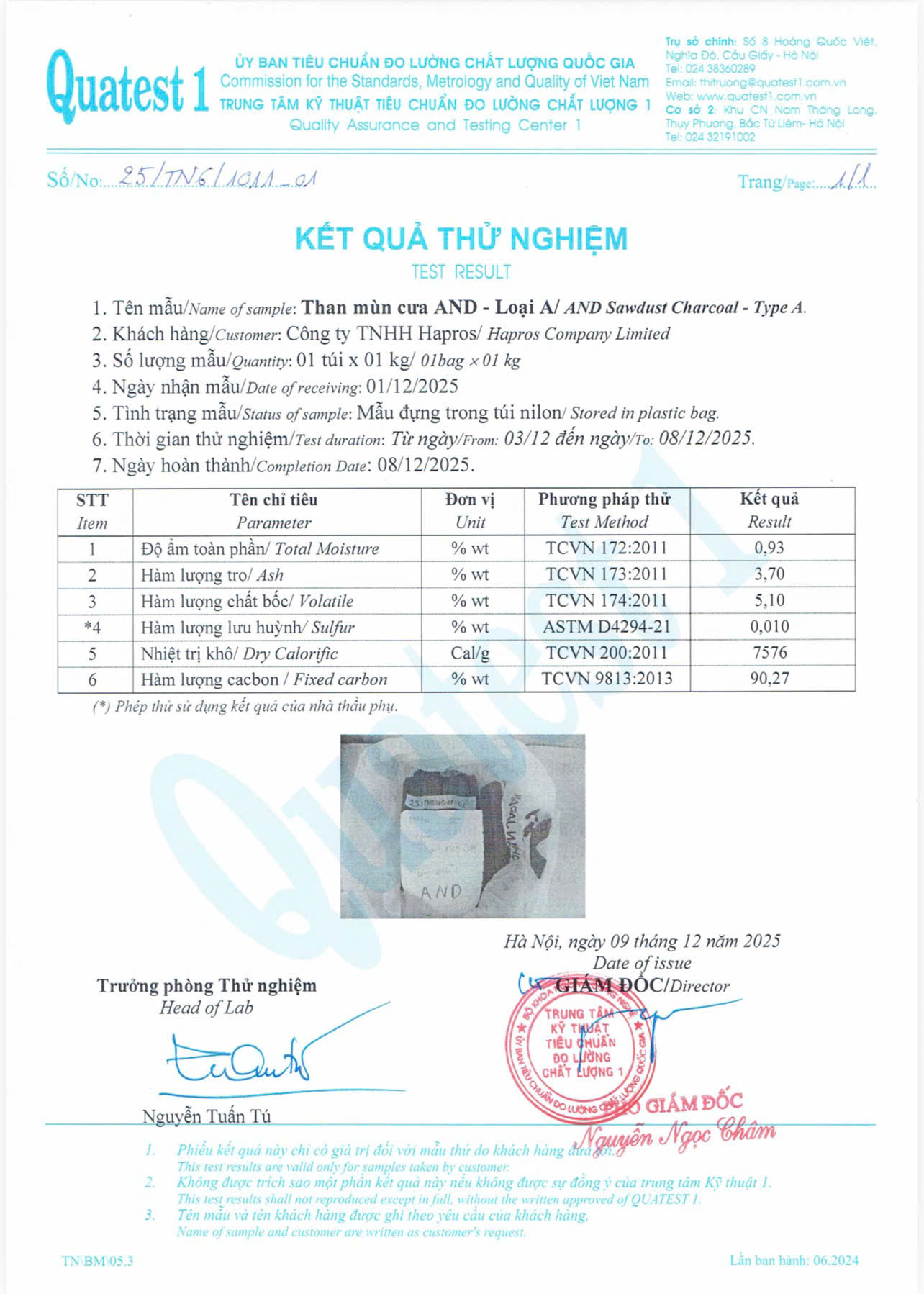
Laboratory testing remains the most accurate method for measuring charcoal quality.
A typical laboratory report includes:
◆ Moisture
◆ Ash Content
◆ Volatile Matter
◆ Fixed Carbon
◆ Calorific Value
These results provide standardized data for comparing suppliers and verifying contract specifications.
However, laboratory reports should not be the only basis for evaluating charcoal. They cannot fully reflect durability, burning behavior, or customer experience.
The most reliable approach is to combine laboratory analysis with practical inspection methods.
Quick Inspection Checklist
Before placing an order, use the following checklist:
Inspection | Purpose |
|---|---|
Check the raw material | Understand the potential quality of the charcoal |
Inspect the cyclone system | Ensure impurities are removed before production |
Perform a drop test | Evaluate briquette strength |
Conduct a burning test | Check heat, burning time, ash, and combustion performance |
Try the LED test | Observe the relative conductivity of the charcoal |
Review the laboratory report | Verify technical specifications |
Completing these checks provides a much clearer picture of product quality than relying on price or laboratory data alone.
Final Thoughts
Evaluating Vietnam sawdust charcoal does not require complicated equipment or expensive testing.
By checking the raw materials, confirming the factory uses an effective cyclone system, performing a drop test, observing the charcoal during a burning test, using the LED conductivity demonstration, and reviewing laboratory results, importers can make more informed purchasing decisions.
These practical methods help reduce quality risks, improve product consistency, and build stronger long-term partnerships with reliable suppliers.
For buyers sourcing Vietnam sawdust charcoal, combining practical inspections with laboratory data is the best way to ensure the product meets both technical requirements and customer expectations.