For Korean charcoal importers, bamboo sawdust charcoal from Vietnam is becoming an interesting alternative to conventional wood sawdust charcoal.
The reason is not only its performance. Vietnam has a large bamboo raw-material base, an established bamboo-processing industry, and a growing supply of bamboo processing by-products that can be converted into charcoal.
1. What Raw Materials Are Used for Sawdust Charcoal in Vietnam?
Vietnamese sawdust charcoal is mainly produced from several types of biomass waste.
Sawdust from furniture and woodworking villages is one of the traditional sources. Vietnam has a large furniture and wood-processing industry, creating a steady supply of sawdust.
Acacia sawdust and wood residues are also widely used because acacia is one of Vietnam's major plantation timber species. However, acacia raw materials are increasingly connected to the wood-chip industry, creating stronger competition for wood residues.
You may want to read: Premium Hardwood Sawdust Charcoal vs Acacia Sawdust Charcoal
Another interesting source is bamboo processing waste.
Bamboo is widely processed into chopsticks, toothpicks, incense sticks, bamboo mats, skewers and other products. The processing of these products generates large quantities of bamboo dust, small pieces and other residues.
Instead of treating these materials simply as waste, they can be processed into bamboo sawdust charcoal.
2. Why Is Bamboo Sawdust Charcoal Interesting?
A large and established raw-material base
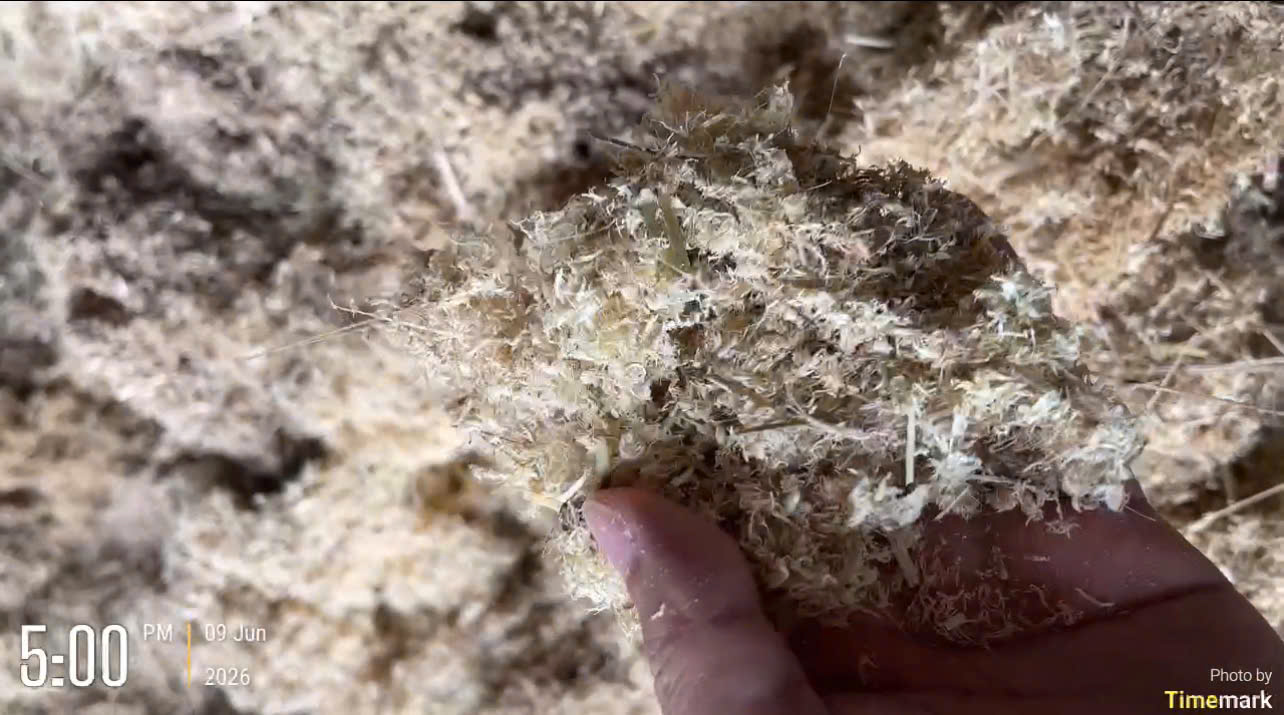
Vietnam has a substantial bamboo industry, particularly in northern and north-central provinces.
Thanh Hoa is one of the most important bamboo-producing areas in Vietnam. A 2024 study reported approximately 180,786 hectares of bamboo forest in Thanh Hoa and estimated annual bamboo raw-material supply at around 1.6 million tons.
The province also has an established processing industry. Chopsticks and other bamboo products are important processing activities, creating a continuous stream of bamboo residues.
This gives bamboo charcoal an important advantage:
The raw material is connected to an existing manufacturing industry rather than depending only on the charcoal industry itself.
The raw material comes from processing by-products
Bamboo dust can come from industries producing:
Chopsticks
Toothpicks
Incense sticks
Bamboo mats
Skewers
Other bamboo products
This creates an interesting supply model for charcoal manufacturers.
Instead of purchasing valuable primary timber specifically for charcoal production, manufacturers can utilize residues generated during bamboo processing.
This can help create a more stable raw-material supply and reduce dependence on conventional wood sawdust.
By comparison, acacia-based raw materials face increasing competition from Vietnam's wood-chip and engineered-wood industries.
3. Why Could Bamboo Charcoal Fit the Korean Market?
For Korean importers, the most important question is not simply whether bamboo charcoal can burn.
The question is:
Does it offer the characteristics that Korean restaurants and charcoal users actually value?
Bamboo sawdust charcoal can be produced in both square and hexagonal shapes, depending on the production process and customer requirements.
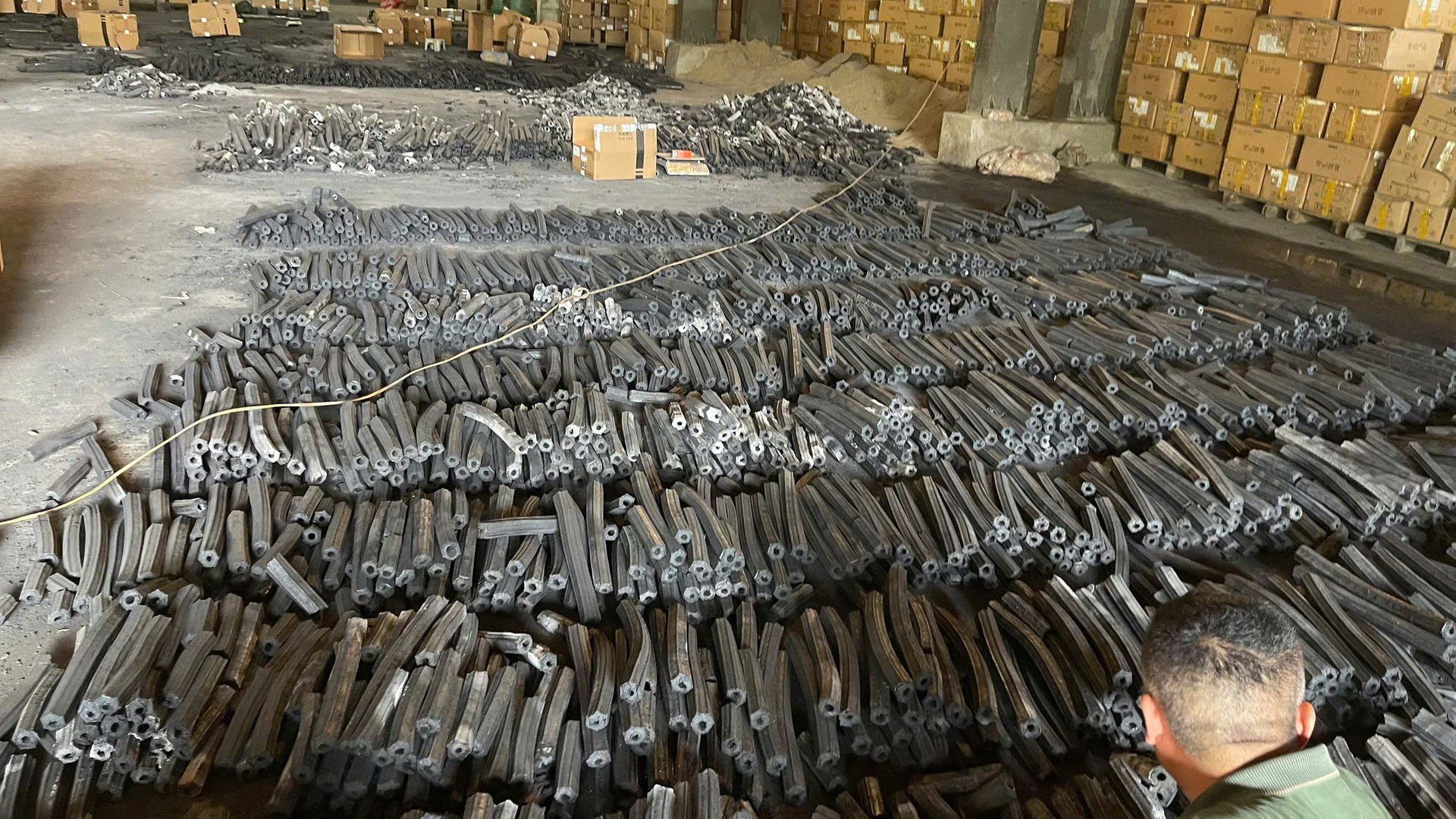
It can also offer several characteristics that are attractive for premium grilling applications:
High heat and clean combustion
Well-produced bamboo charcoal can provide high heat (>7000 kcal/g) with high fixed-carbon content (>85%), while producing no smoke and odor during combustion.
The combination is particularly interesting for restaurants where charcoal performance directly affects the dining experience.
For premium Korean BBQ restaurants, charcoal with clean combustion can be suitable for tabletop grilling and open-fire presentation, where smoke and odor can negatively affect customers.
White ash
White ash is another attractive characteristic.
For Korean BBQ applications, a clean appearance after combustion can be desirable, especially in restaurants that emphasize premium ingredients and presentation.
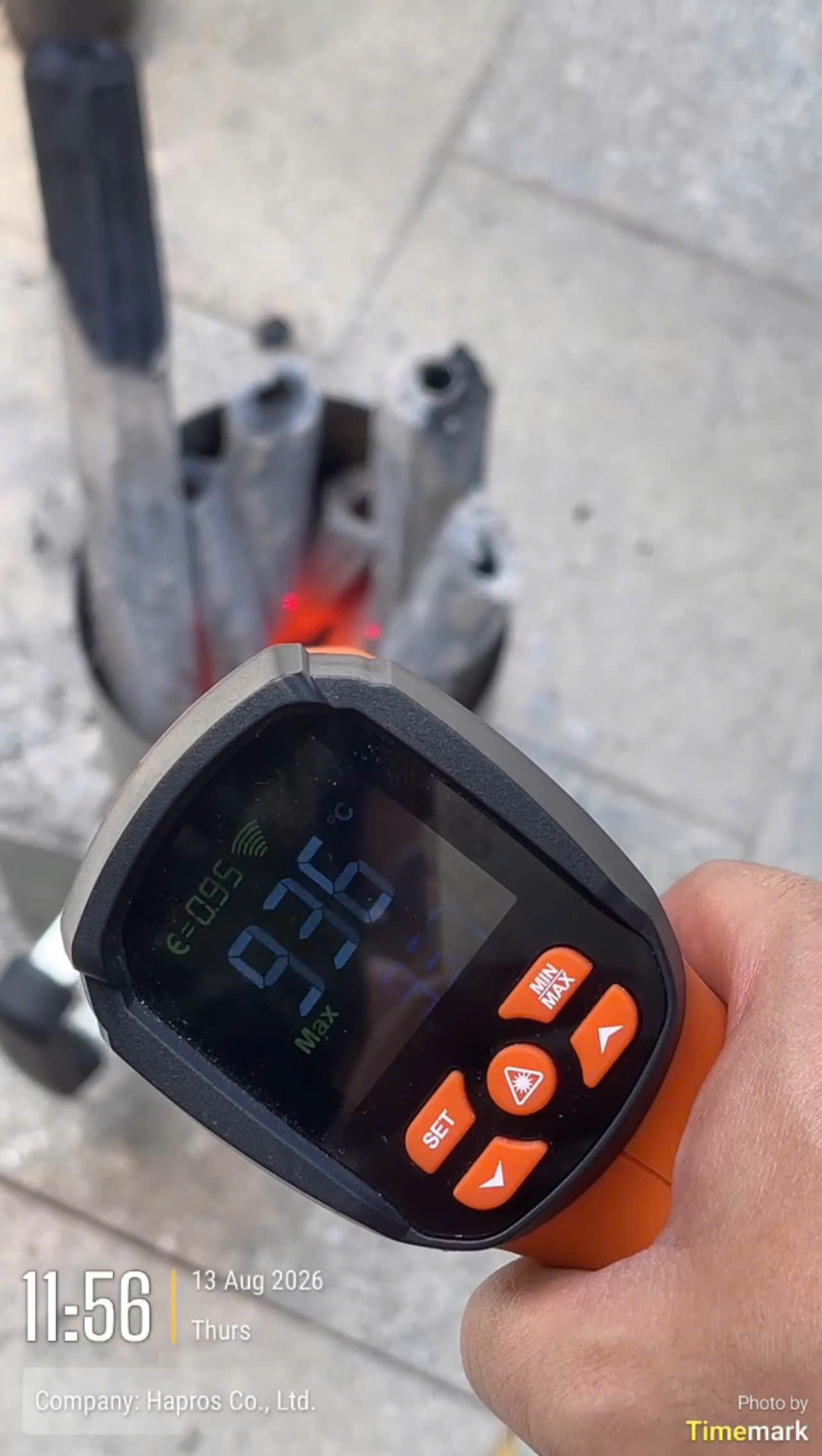
4–5 hours of burning time
Depending on density, dimensions and production conditions, bamboo sawdust charcoal can be designed for approximately 4–5 hours of total burning time.
More importantly, the charcoal can maintain strong heat during the first several hours.
This can fit the typical dining period of restaurant customers without requiring frequent charcoal replacement.
Faster ignition
Bamboo sawdust charcoal can also be produced to achieve relatively fast ignition.
A target of around 10 minutes to reach a usable glowing condition can be attractive for busy restaurants.
For restaurants operating during lunch and dinner peaks, reducing the time required to prepare charcoal means:
less waiting time + easier kitchen operation + better labor efficiency.
Customizable dimensions
Another advantage is flexibility.
For restaurants using smaller grills or compact charcoal stoves, bamboo charcoal can potentially be cut into shorter pieces, for example 5–10 cm, depending on the customer's equipment and requirements.
This gives importers more flexibility when supplying different restaurant formats.
4. A Potential Cost Advantage
Bamboo charcoal can also be interesting from a purchasing perspective.
Bamboo is fast-growing and widely cultivated in Vietnam, while bamboo processing creates a significant amount of industrial residue.
This creates an opportunity to produce charcoal from relatively low-cost by-products rather than relying entirely on conventional hardwood sawdust.
For importers, this can create a potentially attractive combination:
competitive raw-material cost + high performance + flexible specifications.
There may also be a logistics advantage compared with sourcing certain bamboo charcoal products directly from Indonesia, depending on the final destination, freight rates and container utilization.
For Korean buyers, Vietnam's geographical position and established export infrastructure can make Vietnam an interesting alternative sourcing base.
You may want to read: Vietnam, Indonesia, or Malaysia: Which Sawdust Charcoal Is the Right Choice for Importers?
5. Is Bamboo Charcoal a Good Opportunity for Korean Importers?
We believe it is worth testing.
Rather than replacing every existing charcoal product, Korean importers can position Vietnamese bamboo sawdust charcoal as a specialized product for restaurants looking for clean-burning, high-temperature and premium-looking charcoal.
Potential applications include:
Premium Korean BBQ restaurants
Restaurants using tabletop grills
High-end BBQ restaurants
Restaurants requiring low-smoke charcoal
Small charcoal stoves
Restaurants looking for consistent charcoal dimensions
The key is not simply to sell “bamboo charcoal”.
The product should be developed around the actual requirements of the Korean restaurant market:
heat → burning time → ignition time → ash → odor/smoke → dimensions → price.
6. Where Can Korean Importers Source Bamboo Charcoal from Vietnam?

For importers looking for Vietnamese bamboo sawdust charcoal, working with a supplier that understands both raw-material sourcing and export requirements is important.
Hapros Co., Ltd.
Hapros Co., Ltd. is a Vietnam-based trading company specializing in vietnam sawdust charcoal and biomass products.
Our role is not simply to connect buyers with a factory.
We work with different charcoal producers and raw-material sources in Vietnam to identify products according to the buyer's required specifications.
For bamboo sawdust charcoal, we can discuss specifications such as:
Square or hexagonal shape
Customized length
Burning time
Ignition time
Ash characteristics
Packing
Container loading
Export documentation
Pre-shipment quality inspection
For Korean importers interested in exploring bamboo charcoal from Vietnam, starting with a sample test is the most practical way to evaluate the product for your own restaurant or distribution channel.
You may want to read: How Hapros Co., Ltd Protects Charcoal During Ocean Shipping
Conclusion
Vietnam's bamboo industry offers more than an abundant natural resource.
It also creates a large and continuous stream of industrial by-products from chopstick, toothpick, incense-stick and other bamboo-processing industries.
This gives bamboo sawdust charcoal an interesting foundation for long-term supply.
For Korean importers, the opportunity is even more interesting when these raw-material advantages are combined with:
high heat + white ash + low smoke and odor + 4–5 hour burning time + fast ignition + customizable sizes + competitive cost.
Vietnamese bamboo sawdust charcoal may not simply be another type of charcoal.
It could become a practical alternative for Korean importers looking for a more competitive and diversified charcoal supply.