For restaurants, hotels, cafés, and shisha lounges, using charcoal does not end when the charcoal stops burning.
There is another problem that many HoReCa businesses have to deal with every day: ash and waste disposal.
Sawdust charcoal with excessive ash can create more waste, require more frequent cleaning, and increase the workload and cost associated with waste handling. For businesses that consume large quantities of charcoal, this can become a significant operational issue.
But what does this have to do with the cyclone system inside a sawdust charcoal factory?
A cyclone system may look like a simple dust-collection machine, but it plays an important role in controlling raw materials and supporting the consistency of sawdust charcoal production.
Let's take a closer look.
1. What Is a Cyclone System?
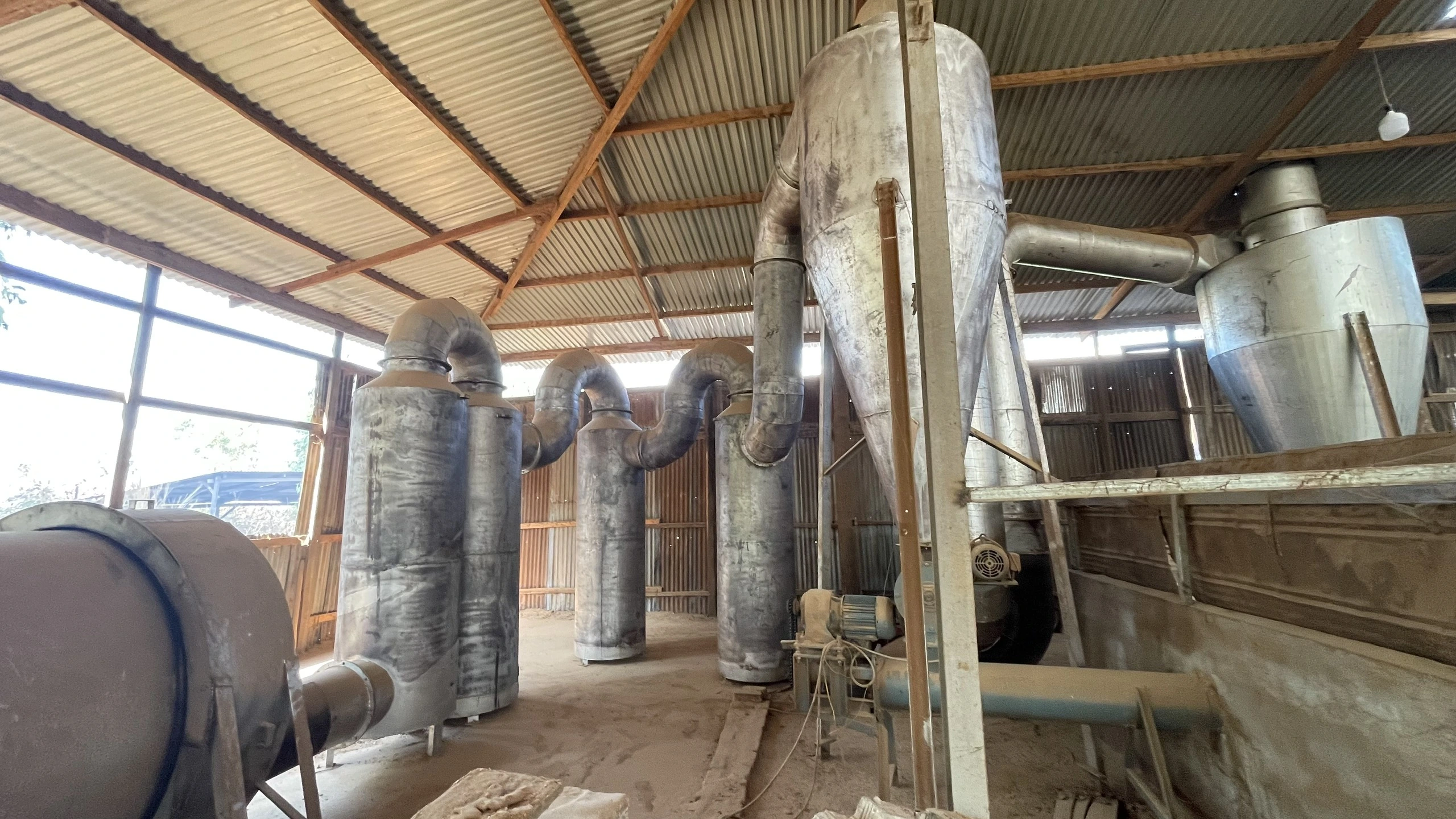
A cyclone system, also known as a cyclone separator, is equipment designed to separate particles from an airflow.
It works by creating a strong rotating airflow. Due to centrifugal force, heavier particles move toward the outer wall of the cyclone and fall downward into a collection chamber, while the cleaner air moves out through the upper section.
In a sawdust charcoal factory, a cyclone system can be used to control dust and separate unwanted particles during raw-material preparation.
Its purpose is not simply to keep the factory clean.
By helping control the condition of the sawdust before it enters the next production stages, a cyclone system can contribute to better production stability and more consistent charcoal quality.
Learn more: The Production Process of Sawdust Charcoal in Vietnam
2. How Does a Cyclone System Affect Sawdust Charcoal Quality?
2.1. Helping Control Ash and Unwanted Residues
Ash content is one of the most important characteristics of sawdust charcoal.
For end-users, especially HoReCa businesses, excessive ash means more waste after combustion.
Restaurants and shisha lounges may use charcoal continuously throughout the day. When the charcoal produces a large amount of ash, employees have to collect and remove it more frequently.
A cyclone system helps manufacturers control dust, fine particles, and certain unwanted materials in the raw-material stream before briquetting and carbonization.
It does not mean that a cyclone alone determines the ash content of the final charcoal. Wood species, mineral content, and the carbonization process are also important factors.
However, better raw-material control can help reduce unnecessary contaminants and support a more consistent production process.
The practical result for end-users can be:
Better raw-material control → More controlled ash characteristics → Less unnecessary waste
For high-volume HoReCa customers, this can translate into easier waste handling and potentially lower operating costs.
2.2. Protecting the Sawdust Briquette Extruder
Sawdust used for charcoal production is often collected from woodworking and furniture manufacturing processes.
Although manufacturers can control their raw materials, foreign objects can occasionally enter the material stream.
Examples include:
Small stones or gravel
Nails
Iron fragments
Other heavy foreign materials
These materials can cause serious problems if they enter a sawdust briquette extruder.
The screw, or auger, inside the extruder is responsible for transporting and compressing the sawdust. Hard foreign objects can cause excessive wear or even damage the screw.
A cyclone system can help separate heavier unwanted particles before they reach sensitive production equipment.
This provides an important benefit:
Cleaner raw material → Less equipment wear → Lower maintenance risk
For a charcoal manufacturer, protecting the briquette extruder is not just about reducing repair costs. It also helps maintain stable production and avoid unexpected downtime.
2.3. Supporting Higher and More Consistent Briquette Density
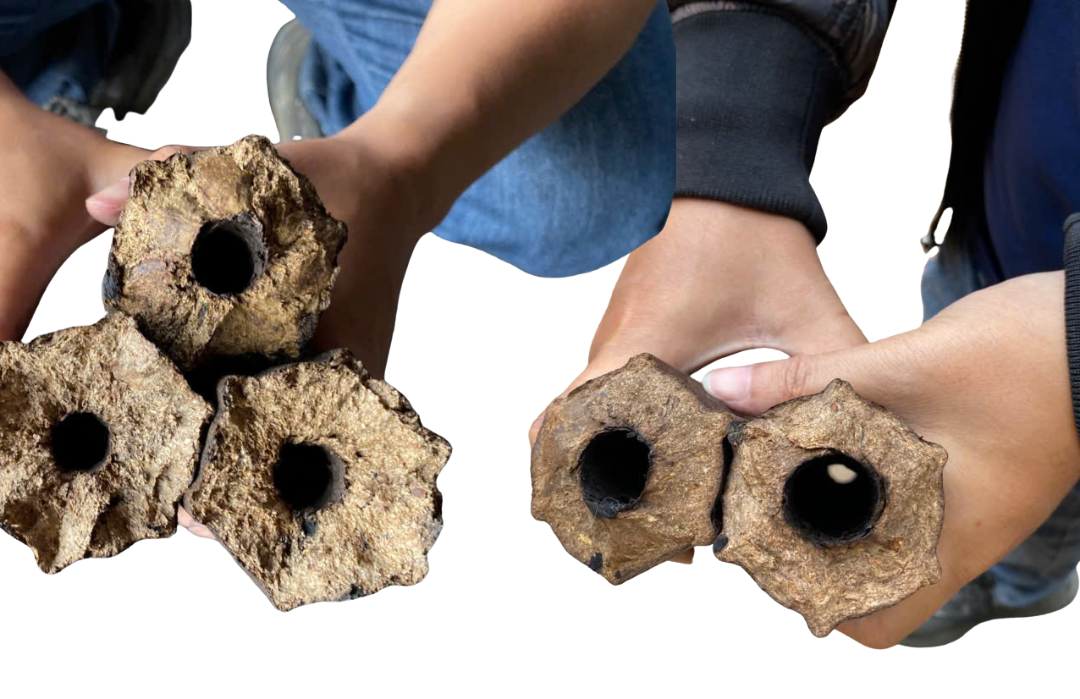
The density of a sawdust briquette is another important factor in charcoal production.
Before sawdust becomes charcoal, it must first be compressed into a briquette. The quality and consistency of the raw material can affect how effectively the material can be compressed.
A more consistent raw-material stream helps the manufacturer maintain more stable briquetting conditions.
Why does this matter?
Because briquette density and structure can influence the characteristics of the charcoal after carbonization, including its mechanical strength and burning behavior.
In general, a well-formed and sufficiently dense briquette can produce charcoal with a more stable structure.
This can contribute to:
Longer burning time
More stable heat
Better mechanical strength
Less breakage during transportation and handling
Therefore, while the cyclone system does not directly "make charcoal burn longer," it can play an indirect role by supporting better raw-material control and more consistent briquetting.
2.4. Improving Production Consistency
Consistency is one of the biggest challenges in sawdust charcoal manufacturing.
Two batches made from poorly controlled raw materials can behave differently during briquetting and carbonization.
A well-designed production system helps manufacturers control variables from the beginning of the process.
The cyclone system is one part of this control.
By helping manage dust and unwanted particles, it can contribute to more consistent raw materials entering the briquetting stage.
Combined with proper control of:
Raw-material species
Moisture content
Particle size
Briquetting pressure
Carbonization temperature
Carbonization time
Cooling conditions
this can help manufacturers achieve more consistent sawdust charcoal quality from batch to batch.
You may want to read: What Sawdust Charcoal Specifications Should Importers Seriously Check?
2.5. Helping Maintain a Cleaner Production Environment
There is another benefit that is easy to overlook.
Sawdust processing naturally creates a large amount of fine dust.
An effective cyclone dust collection system helps capture and manage these particles rather than allowing them to spread throughout the production area.
This can help create a cleaner and more controlled working environment while also reducing the amount of raw material lost as airborne dust.
For a professional charcoal manufacturer, good dust management is therefore both a production and operational consideration.
3. Does a Cyclone System Directly Determine Charcoal Quality?

No.
A cyclone system is important, but it is only one part of the overall production process.
The final quality of sawdust charcoal depends on many factors, including:
Raw material → Moisture → Particle size → Briquetting → Carbonization → Cooling → Packaging
The type of wood used is particularly important because different wood species naturally contain different levels of minerals and can produce different ash characteristics.
Carbonization is equally important. Temperature, heating rate, carbonization time, and cooling conditions can significantly influence the final characteristics of the charcoal.
Therefore, it would be incorrect to say that a cyclone system alone produces low-ash or high-quality charcoal.
Its real value is that it helps manufacturers control the raw-material preparation stage, which supports the stability of the entire production process.
Learn more: How to Evaluate Vietnam Sawdust Charcoal Quality
4. Why Does This Matter to HoReCa Customers?
For a charcoal factory, a cyclone system is a piece of production equipment.
For a restaurant or shisha lounge, however, its benefits can eventually be reflected in daily operations.
A better-controlled production process can help provide charcoal with:
More consistent quality
More controlled ash characteristics
Stable burning performance
Better structural strength
Fewer unwanted contaminants
For HoReCa businesses using hundreds of kilograms or several tons of charcoal every month, these differences can become significant.
The goal is not simply to find charcoal that burns.
The goal is to find charcoal that burns consistently, produces manageable waste, and performs reliably throughout daily operations.
Conclusion: Quality Starts Before the Charcoal Is Carbonized
When people evaluate sawdust charcoal, they usually look at the finished product: burning time, heat, ash, smell, smoke, and appearance.
But the quality of that final product is determined long before the charcoal reaches the customer.
It starts with the raw material and continues through every stage of production.
A cyclone system in sawdust charcoal production is therefore much more than a dust-collection device.
By helping control unwanted particles, protect briquetting equipment, support consistent briquette density, and improve raw-material management, it becomes one part of a larger quality-control system.
For HoReCa customers, the ultimate benefit is simple:
Better-controlled production can lead to more consistent charcoal and less unnecessary waste.
And when charcoal is consumed every day, less waste can mean better operational efficiency.