When importing Vietnam sawdust charcoal, price is important — but it should never be the only factor.
A lower price may come with higher moisture, lower heat output, more ash, or shorter burning time. These differences can directly affect the experience of your customers and, ultimately, the value of the product you import.
For importers, the best way to compare sawdust charcoal objectively is to look at its laboratory-tested specifications.
Here are six key specifications that importers should seriously check before placing an order.
You may want to read: How to Evaluate Vietnam Sawdust Charcoal Quality
1. Calorific Value – How Much Heat Can the Charcoal Produce?
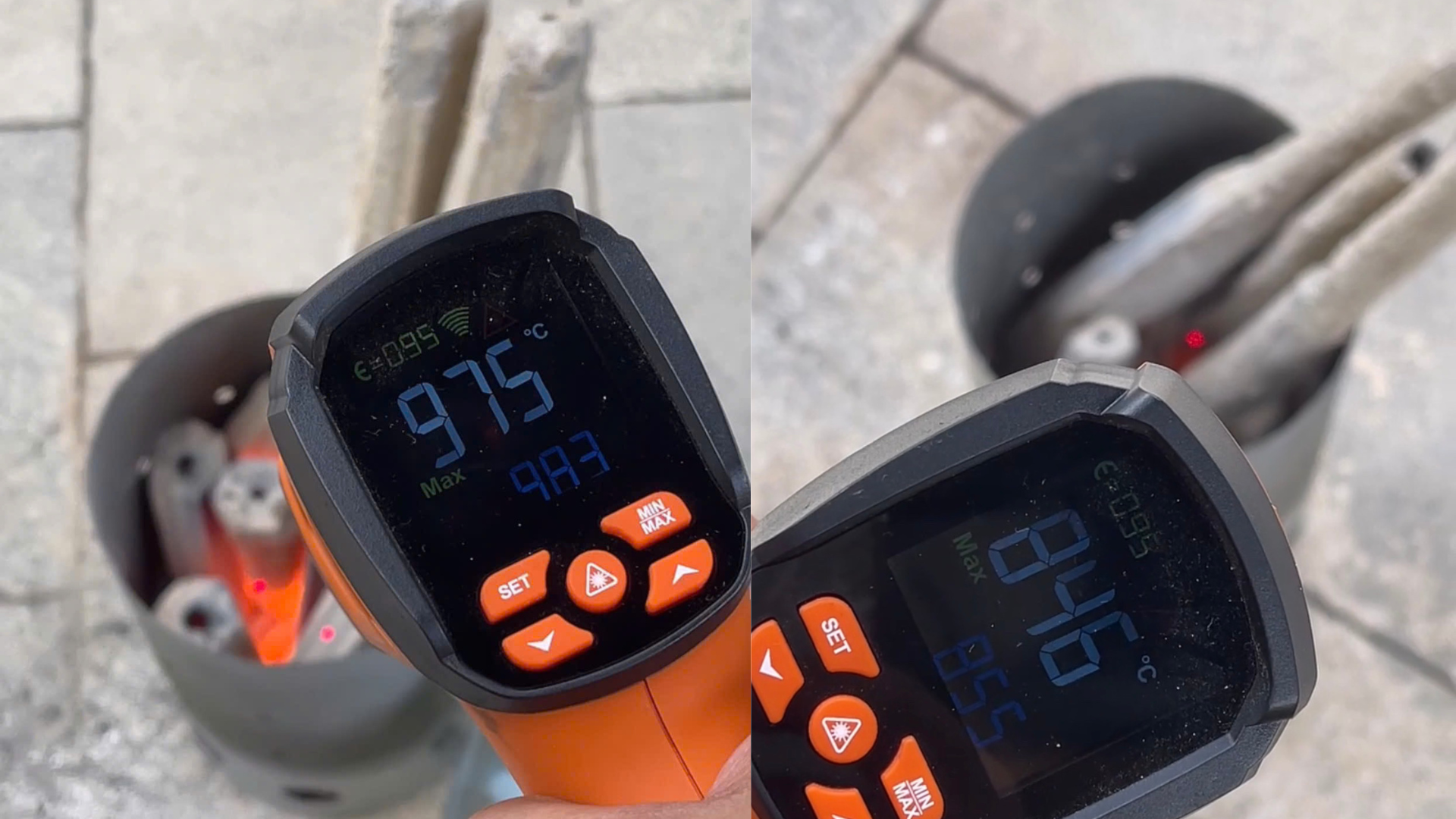
Calorific value is one of the important indicators used to distinguish higher-quality and lower-quality sawdust charcoal. It can also have a significant impact on the product's price.
Sawdust charcoal can have a calorific value of approximately 6,800–8,000 kcal/kg, depending largely on the raw materials and production process.
As a general reference:
Grade A: around 6,800–7,200 kcal/kg
Grade AAA: around 7,600 kcal/kg or higher
The higher the calorific value, the more energy the charcoal can release during combustion.
One of the biggest factors affecting calorific value is the raw material used to produce the charcoal. Different wood species and raw-material compositions can result in different calorific values.
Therefore, importers should not compare prices without comparing the calorific value and other specifications at the same time.
You may want to read: Why Raw Material Determines Sawdust Charcoal Quality
2. Moisture – An Easy Specification to Overlook
Moisture is one of the most important specifications for sawdust charcoal.
High moisture content can directly affect the customer's experience. Charcoal with excessive moisture can take longer to ignite and may make the lighting process frustrating for end users.
The good news is that moisture can be controlled relatively well during production and storage.
With a proper production process and without unnecessarily shortening the drying and carbonization stages, sawdust charcoal can generally be controlled at below 5% moisture.
From an importer's perspective, sawdust charcoal with moisture above 7% should be treated with caution.
Do not judge moisture only by looking at the charcoal. The actual moisture content should be confirmed through a laboratory test.
3. Ash Content – More Ash Means More Cleaning
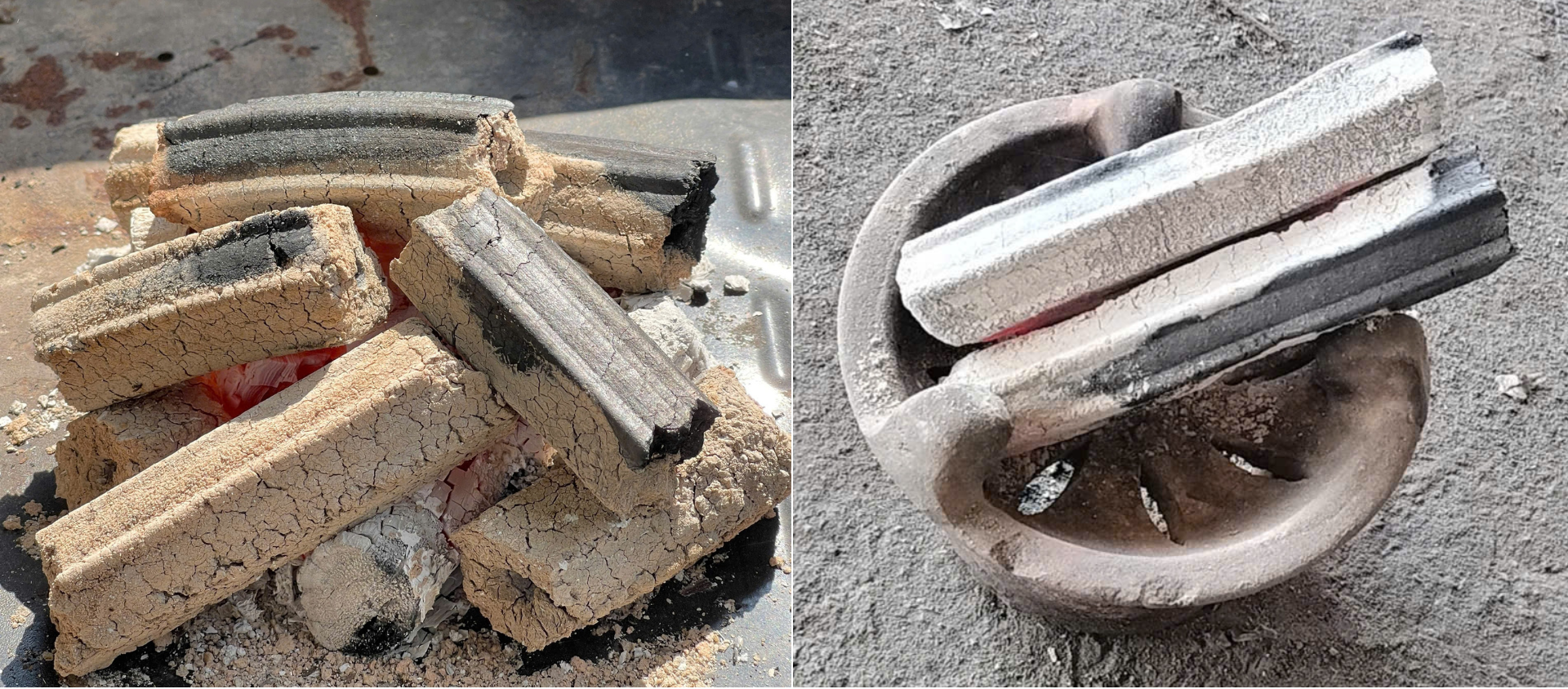
Ash is another specification that many charcoal importers pay close attention to.
After charcoal has been completely burned, the remaining ash must be cleaned and disposed of by the end user.
For restaurants, BBQ businesses and other commercial users, excessive ash can mean:
More frequent cleaning
More labor
Additional cleaning costs
A less convenient user experience
Therefore, when comparing two sawdust charcoal products, importers should not look only at burning time or price. Ash content should also be included in the comparison.
A laboratory report can provide an objective measurement of the ash content.
4. Volatile Matter – An Important Factor in Burning Time
Volatile matter is another specification that deserves serious attention, especially for markets that require long-burning charcoal.
In general:
Higher volatile matter → shorter burning time
Lower volatile matter → longer burning time
This is particularly important for buyers who need charcoal that can burn for 6–8 hours or other extended periods.
However, burning time is not determined by volatile matter alone. Raw materials, carbonization conditions, density, size and other production factors can also influence the final performance.
For this reason, importers should consider volatile matter together with the actual burning test rather than relying on a single specification.
5. Fixed Carbon – An Indicator of Charcoal Quality
Fixed carbon is one of the key parameters used to evaluate charcoal quality.
For sawdust charcoal, fixed carbon can typically range from approximately 75% to 90%, depending on the raw material and carbonization process.
A higher fixed carbon percentage generally indicates a more carbon-rich product.
It can also influence the product's value and production cost. Producing charcoal with a higher fixed carbon content may require more controlled processing and can result in higher production costs.
For importers, fixed carbon should therefore be considered together with:
Calorific value
Ash content
Moisture
Volatile matter
Burning performance
Looking at all these parameters together gives a much clearer picture of the product than relying on a single number.
6. Sulfur – A Specification Worth Checking
Sulfur is naturally present in some types of wood and is an undesirable component that buyers may want to monitor.
After the carbonization process, the remaining sulfur content in sawdust charcoal is generally very low. Based on the information typically observed in Vietnamese sawdust charcoal testing, it is often below 0.1%.
However, importers should not simply assume a sulfur level based on the production method or country of origin.
If sulfur is an important requirement for your market, the best approach is simple:
Ask the supplier for a laboratory test report.
This provides an objective basis for evaluating the actual product.
Don't Compare Charcoal by Price Alone
When importing sawdust charcoal, it is easy to focus on one question:
How much is the price per ton?
But a better question is:
What specifications am I getting for that price?
You may want to read: What to Specify When Sourcing Sawdust Charcoal from Vietnam
For example, two suppliers may offer the same product at different prices, but their charcoal could have significantly different:
Specification | Why It Matters |
|---|---|
Calorific Value | Indicates heat output and influences product value |
Moisture | Affects ignition and user experience |
Ash Content | Affects cleaning after combustion |
Volatile Matter | Influences burning characteristics and duration |
Fixed Carbon | Indicates carbon content and product quality |
Sulfur | Important for monitoring undesirable components |
This is why experienced importers should compare specifications + performance + price, rather than price alone.
You may want to read: Types of Sawdust Charcoal in Vietnam
Ask Your Supplier for a Laboratory Test
All of these specifications can be determined through laboratory testing.
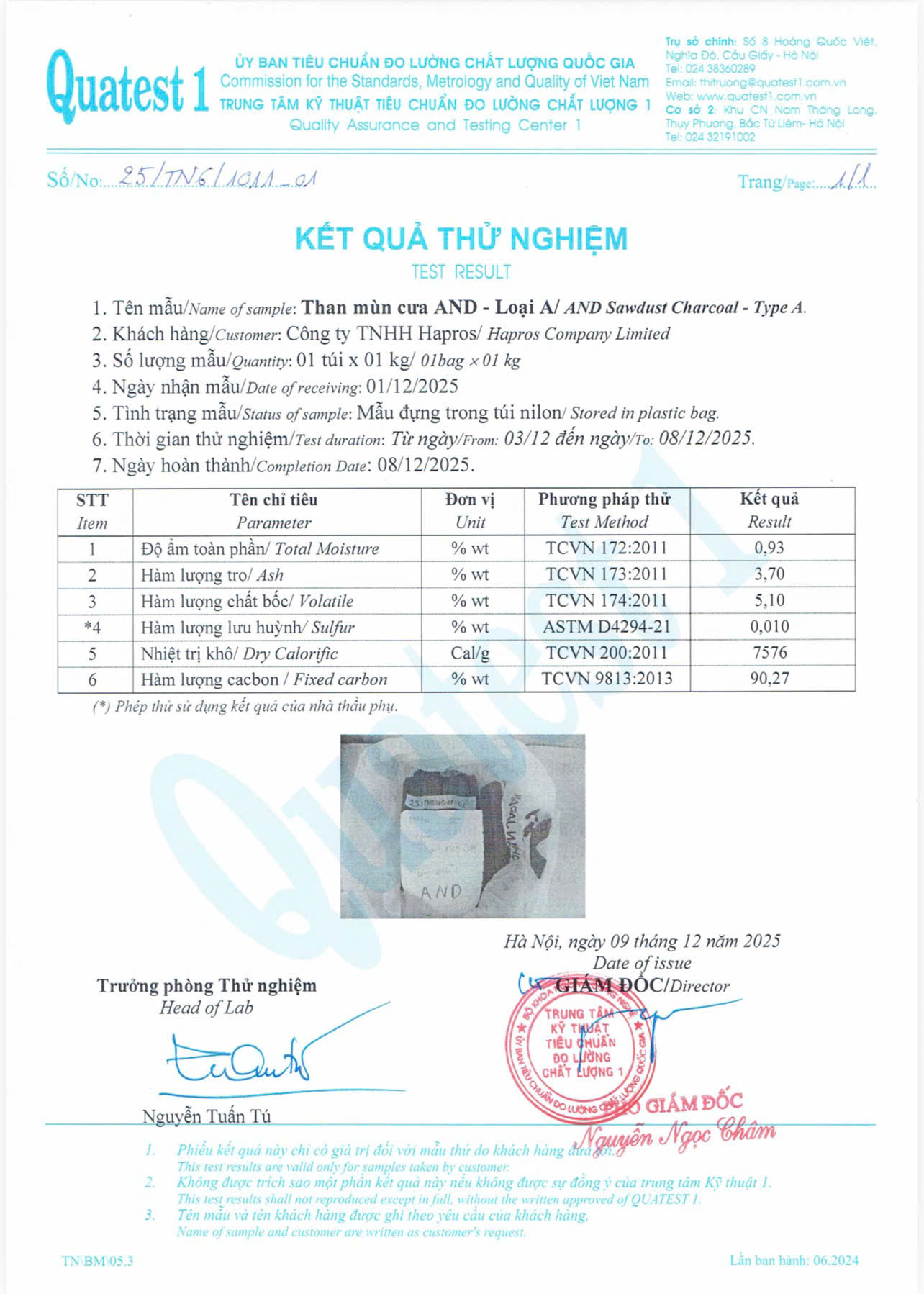
Before placing a large order, importers should ask the supplier to provide a laboratory test report or Certificate of Analysis (COA) showing the relevant product specifications.
More importantly, if certain specifications are critical to your market, make sure the supplier confirms and commits to those specifications before production and shipment.
This is particularly important when moving from a sample order to a full container.
A reliable supplier should be able to clearly explain:
What raw materials are used
What specifications the product is produced to
How the specifications are controlled
How the product is tested
Whether the specifications can be maintained consistently from shipment to shipment
Final Thoughts
There is no single specification that can tell you whether a sawdust charcoal product is good or bad.
Calorific value, moisture, ash, volatile matter, fixed carbon and sulfur should be considered together.
For importers, laboratory testing provides a much more reliable basis for comparing suppliers and protecting product quality than simply judging charcoal by its appearance or price.
You may want to read: How to Choose a Reliable Vietnam Sawdust Charcoal Supplier
Before you place your next container order, ask your supplier for the laboratory test results and make sure the agreed specifications are clearly confirmed.
At Hapros - sawdust charcoal supplier, we believe that transparent product specifications and proper quality control are essential for building a reliable long-term supply relationship.