Why Sawdust Charcoal Is Preferred by BBQ Restaurants
Sawdust charcoal has become increasingly popular among BBQ restaurants, steakhouses, yakiniku restaurants, and shisha businesses due to its consistent performance and convenience.
Compared to traditional lump charcoal, sawdust charcoal briquettes offer several advantages:
1. Longer Burning Time
Sawdust charcoal burns steadily for an extended period, allowing restaurants to maintain stable heat during busy service hours without frequent replacement.
2. Stable and Even Heat
Restaurants prefer charcoal that delivers consistent heat. Uneven temperature can negatively affect grilling quality and customer experience. Sawdust charcoal provides a more controlled and reliable heat output.
3. Cleaner Burning with Less Smoke
High-quality sawdust charcoal produces minimal smoke and odor, creating a more comfortable dining environment for customers.
4. Better Presentation
Restaurants value visual appeal. High-quality charcoal that produces clean and attractive ash can enhance the premium dining experience.
Why Is Premium Village Hardwood Sawdust Charcoal More Expensive Than Acacia Sawdust Charcoal?
Not all sawdust charcoal is made from the same raw materials.
In Vietnam, there are generally two common categories of sawdust charcoal:
1. Premium Village Hardwood Sawdust Charcoal
This type is produced from sawdust collected from traditional woodworking villages that manufacture luxury furniture.
The raw materials mainly come from premium hardwood species such as:
Ironwood (Lim Wood)
Rosewood (Huong Wood)
Dalbergia / Precious Rosewood (Trac Wood)
Many of these hardwood logs are imported from Africa and processed in Vietnam for premium furniture manufacturing. The leftover sawdust is then recycled into charcoal production.
2. Acacia Sawdust Charcoal
This charcoal is made from acacia wood, a fast-growing plantation species widely cultivated and harvested in Vietnam.
The sawdust mainly comes from:
Veneer factories
Wood board manufacturers
Sawmills processing plantation timber
Because the raw material source is different, the final charcoal quality and pricing are also different.
A. Raw Material Cost
Premium hardwood sawdust is significantly more expensive because the original timber is imported and has a much higher market value.
In contrast, acacia wood is locally grown in Vietnam and has a lower material cost.
As a result, premium hardwood charcoal naturally carries a higher price.
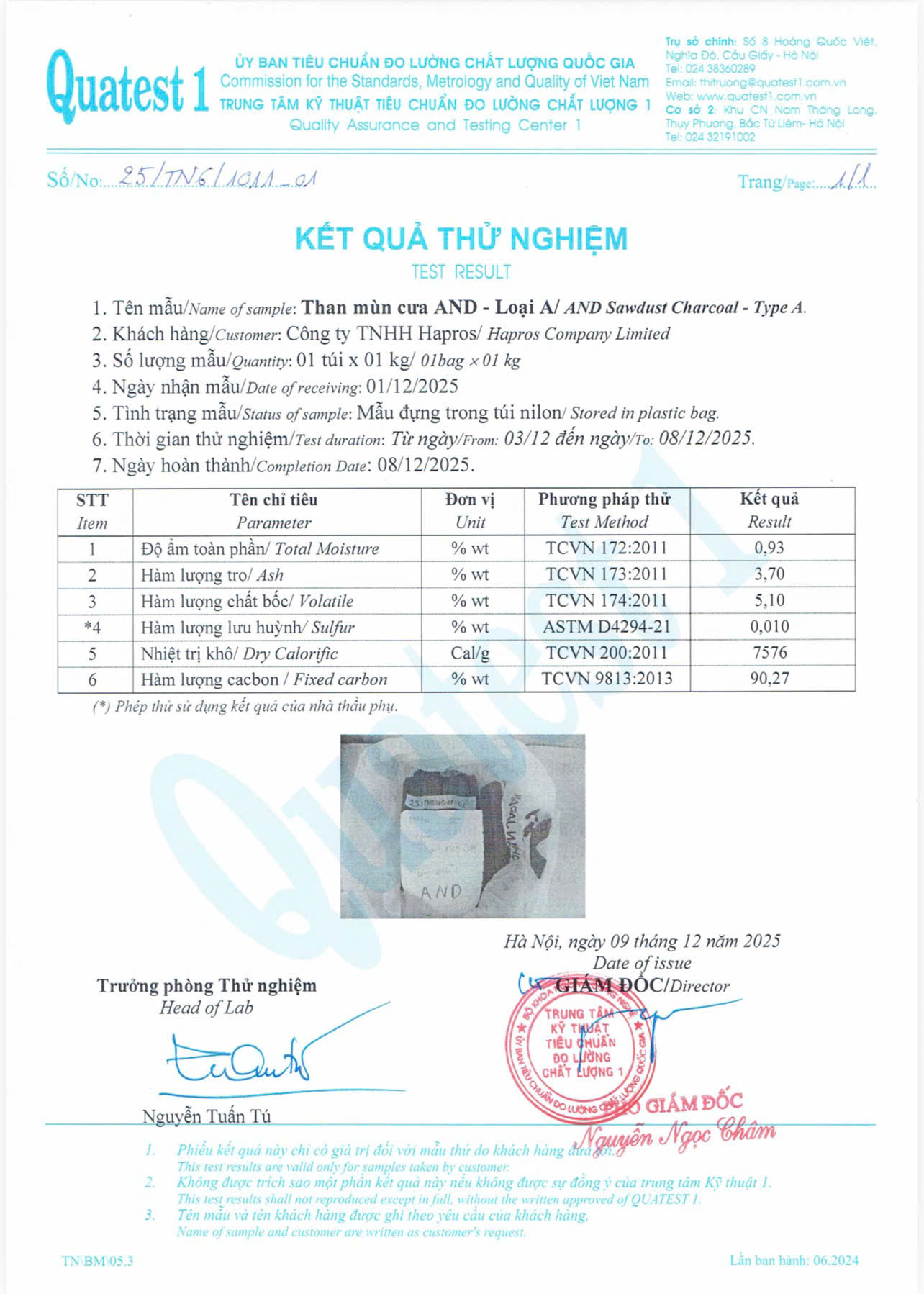
B. Higher Heating Value
One of the biggest differences is calorific value.
Premium hardwood sawdust charcoal:
Approximately 7,500–8,000+ kcal/kg
Acacia sawdust charcoal:
Approximately 6,500–7,400 kcal/kg
Higher calorific value means:
Stronger heat
Longer burning duration
Better grilling performance
Lower charcoal consumption over time
This is one reason why many premium BBQ restaurants prefer hardwood-based charcoal.
C. Higher Fixed Carbon Content
Premium hardwood charcoal generally contains over 90% fixed carbon, while acacia charcoal typically contains around 80% fixed carbon.
Higher carbon content often contributes to:
Higher heat output
Longer-lasting burning
More stable performance
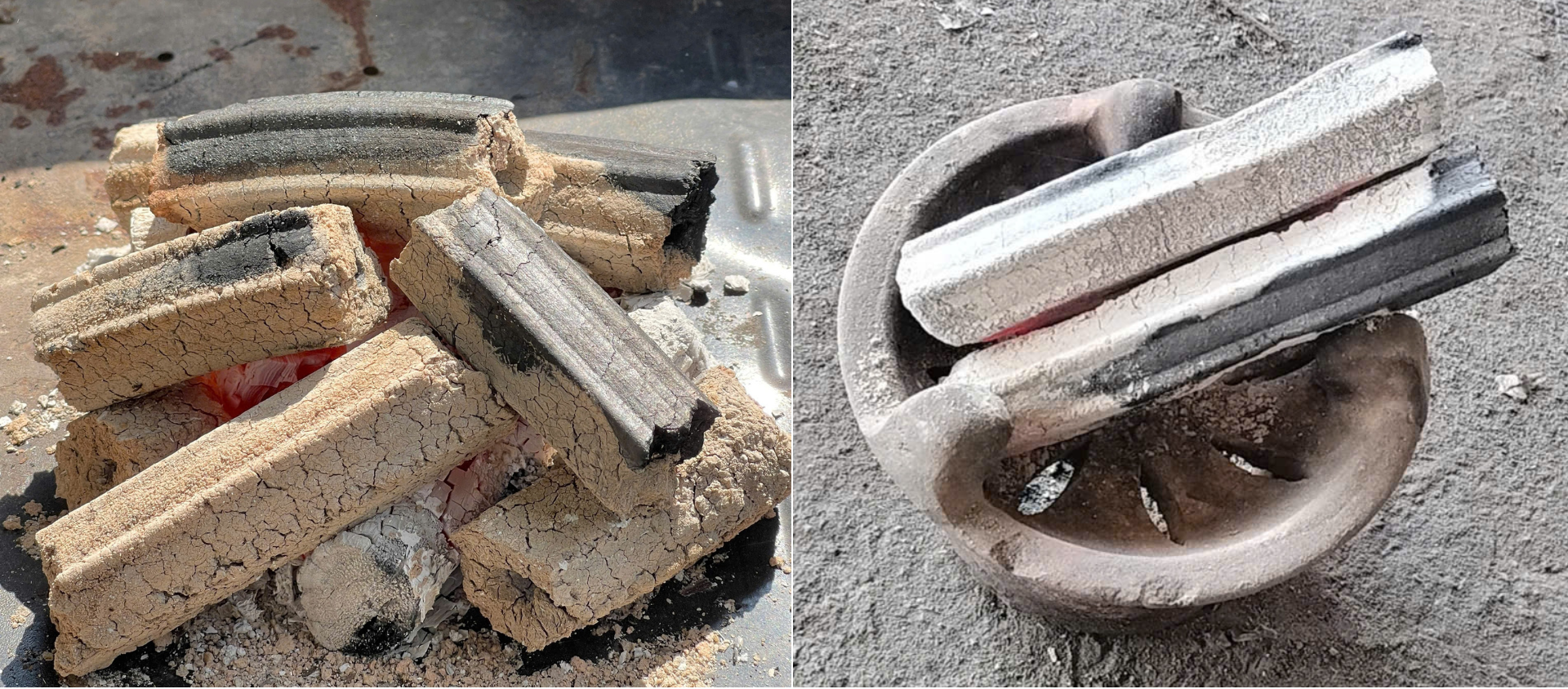
D. Ash Color Difference
After burning, premium hardwood sawdust charcoal often produces a clean white ash, which many restaurants find visually appealing.
Acacia charcoal commonly produces a darker yellowish ash due to differences in raw material composition.
While ash color does not always determine overall performance, it is often considered an indicator of premium-grade charcoal in restaurant applications.
How to Identify the Difference
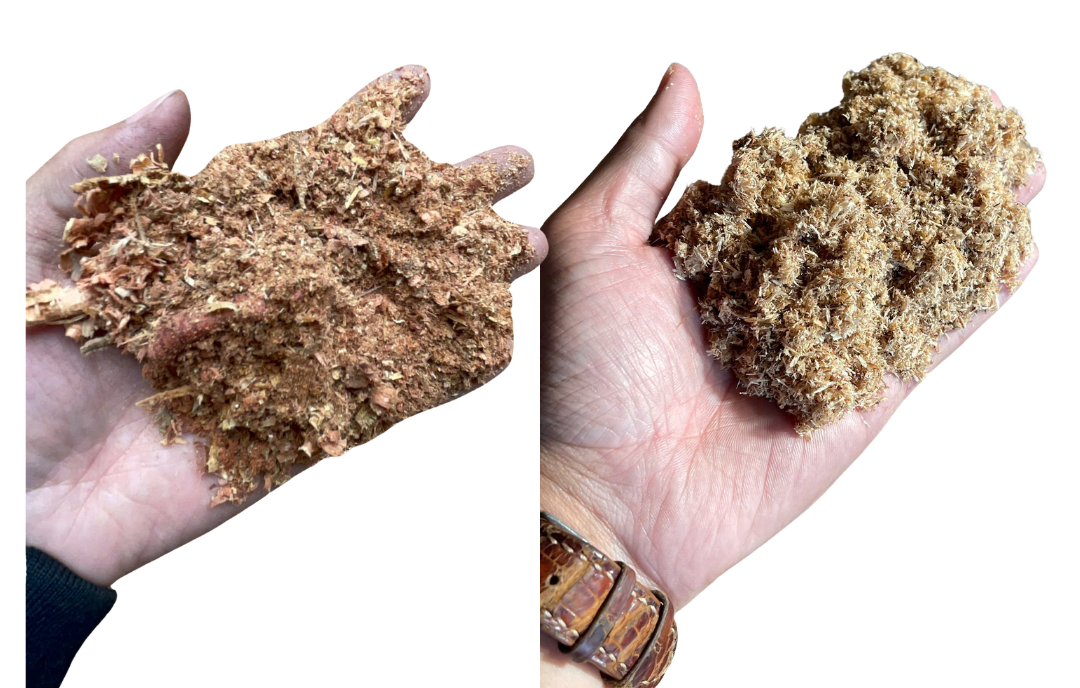
1. Check the Raw Sawdust Material
The first step is to inspect the input material.
Acacia sawdust is relatively easy to identify, as it differs noticeably from the sawdust of hardwood species. In the image below, the acacia sawdust is shown on the right-hand side, featuring a yellowish-brown color.
2. Observe the Briquette Surface During Production
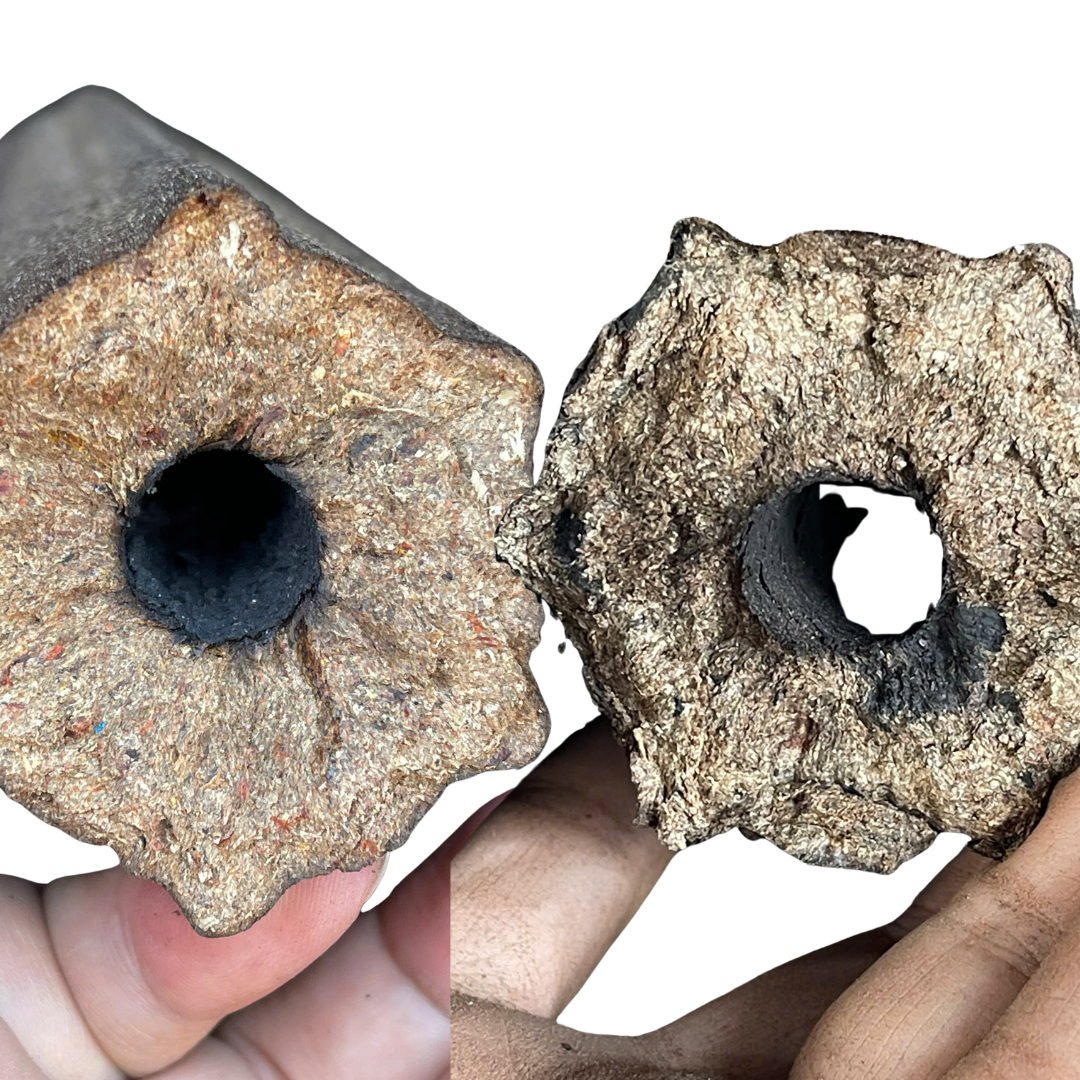
During production, the cross-section of compressed sawdust logs can reveal differences.
Premium hardwood briquettes often appear:
Denser
Darker
More compact
Acacia briquettes are usually:
Lighter in color
More porous
Less dense
3. Compare the Ash After Burning
The easiest visual distinction can often be seen after combustion.
Premium hardwood charcoal:
✓ White ash
✓ More refined appearance
Acacia charcoal:
✓ Dark yellowish ash
✓ Slightly different texture
Which Type Should You Choose?
The answer depends on your market and application.
If your priority is premium grilling performance, stronger heat, longer burning time, and premium presentation, hardwood sawdust charcoal may be the better choice.
If your priority is cost efficiency and stable everyday usage, acacia sawdust charcoal remains a practical and widely used option.
Both products have their own advantages depending on customer requirements.