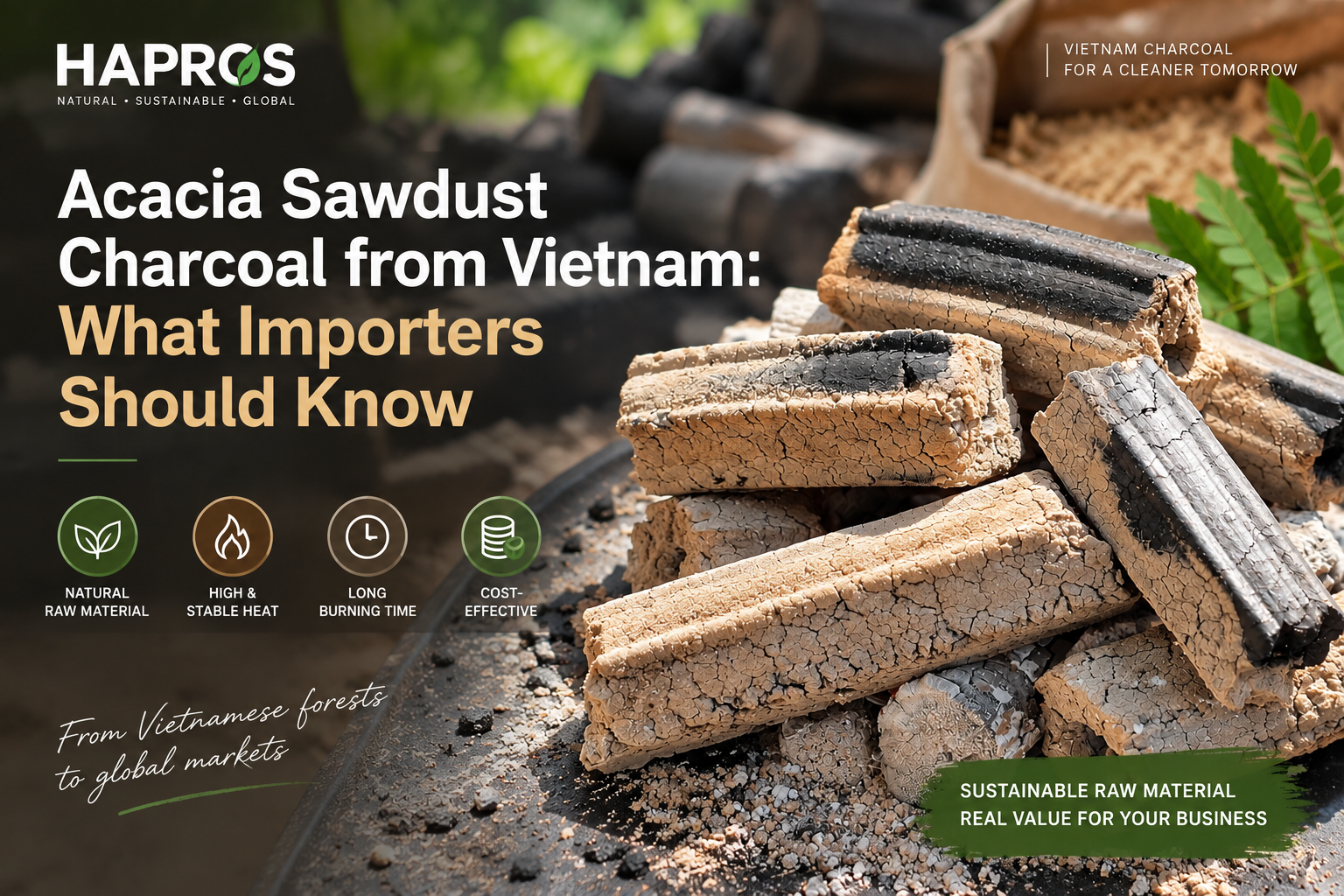
Acacia sawdust charcoal is a popular type of sawdust charcoal produced in Vietnam, particularly for commercial BBQ and wholesale markets. Made from acacia sawdust generated by the wood-processing industry, it offers a balance between heat performance, burning time and cost.
Hapros supplies acacia sawdust charcoal from Vietnam in different sizes, shapes, burning times and packaging options for international buyers.
What Is Acacia Sawdust Charcoal?
Acacia sawdust charcoal is briquette charcoal made from acacia wood sawdust. The sawdust is processed, compressed into briquettes and carbonized to produce dense charcoal with stable heat and a long burning time.
Unlike acacia lump charcoal, it is formed into uniform hexagonal or square briquettes, making size and shape easier to control.
Why Is Acacia Sawdust Charcoal Popular in Vietnam?
Acacia is one of the most important plantation tree groups used for wood production in Vietnam. In Central Vietnam, acacia hybrid dominates plantation wood production, supporting a large wood-processing supply chain.
As acacia logs are processed into furniture, boards and other wood products, sawdust and other wood residues are generated. These residues can be used as raw material for sawdust charcoal instead of being discarded.
Vietnamese charcoal producers also commonly prefer acacia sawdust because it can be relatively easy to form into stable briquettes. Some factories also blend acacia sawdust with hardwood sawdust depending on the required charcoal specifications.
Characteristics of Acacia Sawdust Charcoal from Vietnam
Size and Shape
Acacia sawdust charcoal can be produced in both hexagonal and square briquettes. With properly prepared sawdust and controlled briquetting, the briquettes can have a smooth surface and good structural integrity.
Proper carbonization also helps reduce cracking and breakage during handling and transportation.
Fixed Carbon
Acacia sawdust charcoal typically has a lower fixed carbon content than premium hardwood sawdust charcoal.
Depending on the raw material and production process, fixed carbon can typically be around 75–82%.
For buyers, fixed carbon should be considered together with burning time, ash content and the actual performance of the charcoal rather than used as the only quality indicator.
Ash Color
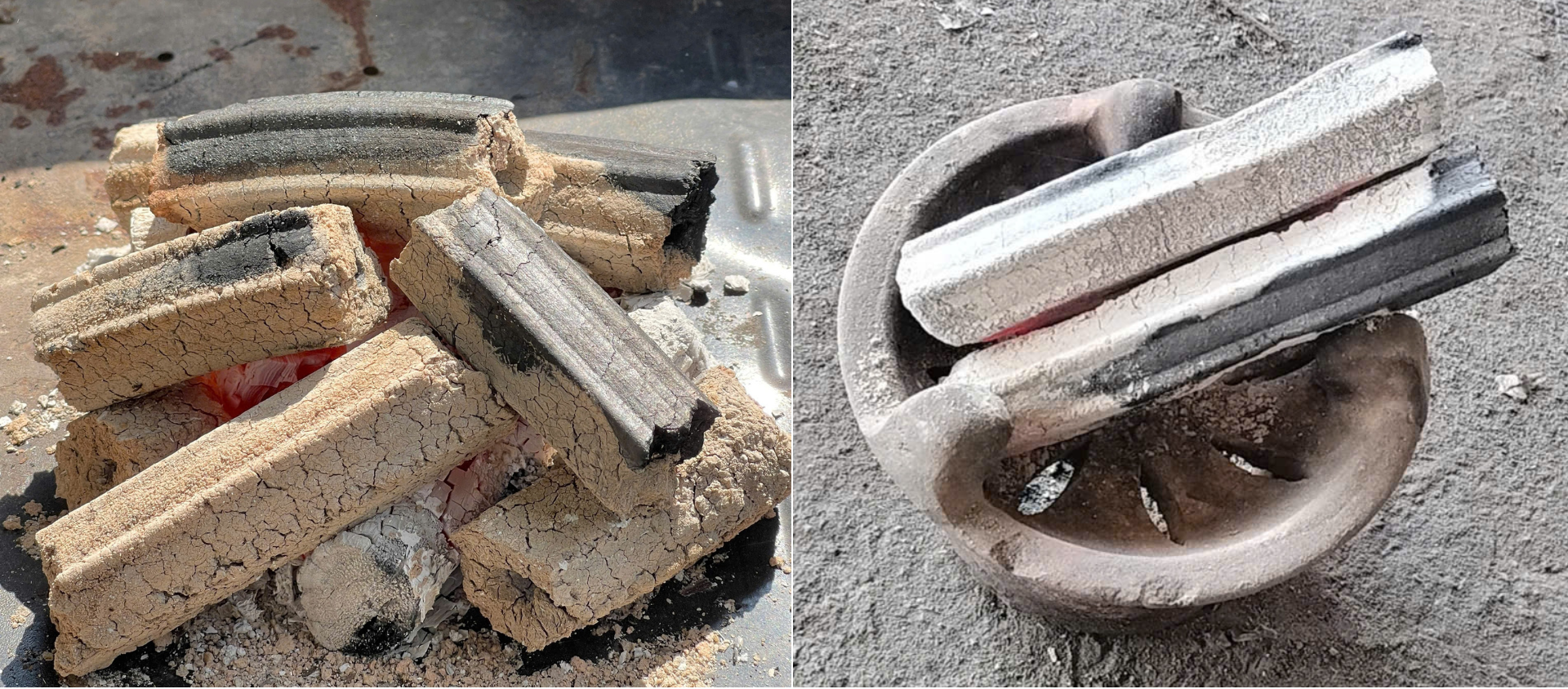
One characteristic often noticed by buyers is the yellowish or light-colored ash produced by acacia charcoal.
It is different from the whiter ash commonly associated with some hardwood charcoal. While this does not necessarily indicate poor charcoal performance, ash appearance can influence buyer preferences, particularly in premium BBQ markets.
Ash, Moisture and Burning Time
Acacia sawdust charcoal can achieve competitive ash content, moisture and burning time compared with hardwood sawdust charcoal.
However, these characteristics depend heavily on raw material preparation, briquette pressing, carbonization and factory operating methods. Two factories using acacia sawdust can therefore produce significantly different charcoal quality.
Who Is Acacia Sawdust Charcoal Suitable For?
Acacia sawdust charcoal can be a practical choice for:
Commercial BBQ restaurants
HoReCa businesses
Charcoal wholesalers and importers
High-volume BBQ markets
Buyers looking for a good cost-to-performance balance
Well-produced acacia sawdust charcoal can provide high and stable heat and can achieve burning times of 6–7 hours or more, depending on the specification and production process.
For premium restaurants or markets where very light-colored ash is important, hardwood sawdust charcoal may be preferred.
How Is Acacia Sawdust Charcoal Produced in Vietnam?
The basic production process is:
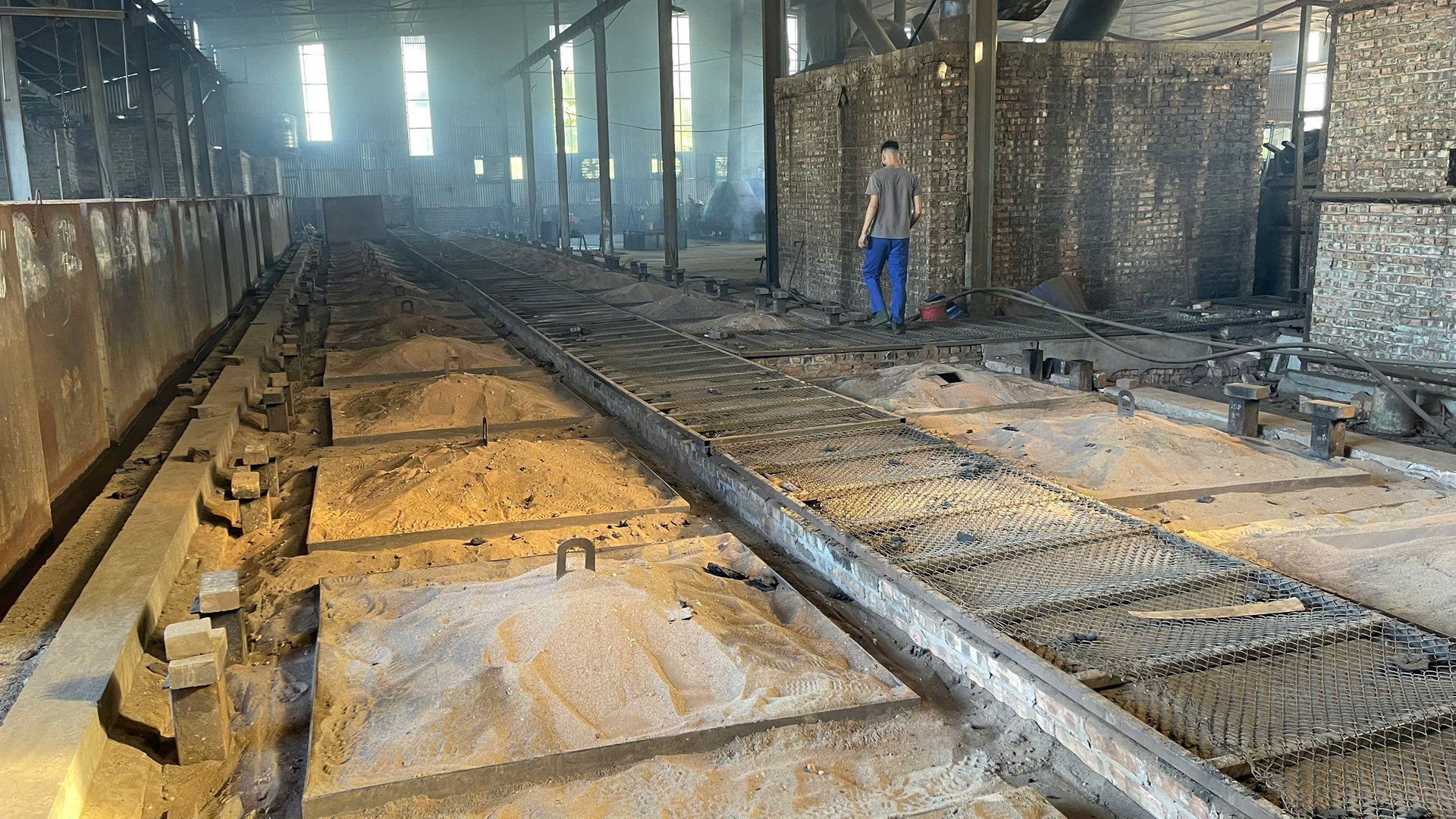
Acacia sawdust → preparation → briquette pressing → carbonization → cooling → quality inspection → packing
Vietnamese producers commonly use brick kilns or steel kilns for carbonization. The kiln type is only one factor; the final quality depends heavily on how the kiln is operated, including oxygen control, carbonization conditions and the operator's experience.
You may want to read: The Production Process of Sawdust Charcoal in Vietnam
How to Evaluate Acacia Sawdust Charcoal Quality
The basic quality checks are similar to other sawdust charcoal products: raw material, briquette integrity, moisture, fixed carbon, ash content, size consistency and burning time.
More importantly, buyers should evaluate these factors together rather than judging quality based on the raw material alone.
For a more detailed guide, see How to Evaluate Vietnam Sawdust Charcoal Quality.
Why Source Acacia Sawdust Charcoal from Vietnam?
For many importers, the biggest advantage of Vietnamese acacia sawdust charcoal is cost efficiency.
Vietnam has a well-established plantation and wood-processing industry, with acacia playing an important role in plantation wood production. This creates a local supply of acacia wood residues that can be processed into charcoal.
Combined with competitive manufacturing and export infrastructure, this makes Vietnam an attractive sourcing option for buyers looking for commercial acacia sawdust charcoal at a competitive cost.
FAQ
What is acacia sawdust charcoal?
It is briquette charcoal made from acacia wood sawdust and carbonized for use in BBQ and other applications.
How long does acacia sawdust charcoal burn?
Depending on its specification and production process, well-produced acacia sawdust charcoal can burn for 6–7 hours or longer.
Why does acacia charcoal have yellowish ash?
Yellowish or light-colored ash is a characteristic commonly observed in acacia charcoal. Ash color does not by itself determine the overall performance of the charcoal.
Can acacia sawdust charcoal be supplied in different sizes?
Yes. Acacia sawdust charcoal can be produced in different sizes, lengths and shapes, including hexagonal and square briquettes, depending on buyer requirements.
Looking for Acacia Sawdust Charcoal from Vietnam?
Tell us your required size, burning time, packaging and quantity. Hapros can provide a suitable specification, sample and quotation.