Sawdust charcoal from Laos is attracting interest from international buyers looking for reliable fuel products for barbecue restaurants, food service businesses, and wholesale distribution. With an established wood-processing sector and the potential to utilize wood-processing residues, Laos offers opportunities for developing sawdust charcoal production.
However, a promising raw material supply is only one part of the equation. Consistent product quality, efficient production, proper sorting, and reliable export operations are equally important when choosing a supplier.
In this article, we explore the potential of Laos sawdust charcoal, its key quality characteristics, the risks buyers should consider, and how Hapros Co., Ltd. helps international customers source sawdust charcoal from Laos.
You may want to read: Top 5 Key Sawdust Charcoal Exporting Countries in the Global Market
1. The Production Potential of Sawdust Charcoal in Laos
1.1. A Wood-Processing Industry That Creates Opportunities for Raw Materials
Laos has an established wood-processing sector that provides a foundation for developing value-added wood products.
According to a country profile published by the Food and Agriculture Organization of the United Nations (FAO), Laos's wood industry consumed approximately 2.9 million cubic meters of industrial roundwood. In 2019, sawnwood accounted for approximately 0.6 million cubic meters of roundwood equivalent in the country's primary wood-processing output.
These figures demonstrate the scale of the wood industry, although they should not be interpreted as the actual volume of sawdust available for charcoal production.
Wood-processing activities generate residues such as sawdust, wood shavings, and small wood particles. When suitable and properly sourced, these materials can be used as raw materials for sawdust charcoal production.
Instead of allowing suitable residues to remain underutilized, manufacturers can process them into charcoal briquettes for commercial applications.
This creates an opportunity to add value to wood-processing by-products while developing products for domestic and international markets.
1.2. Potential Cost Advantages in Production
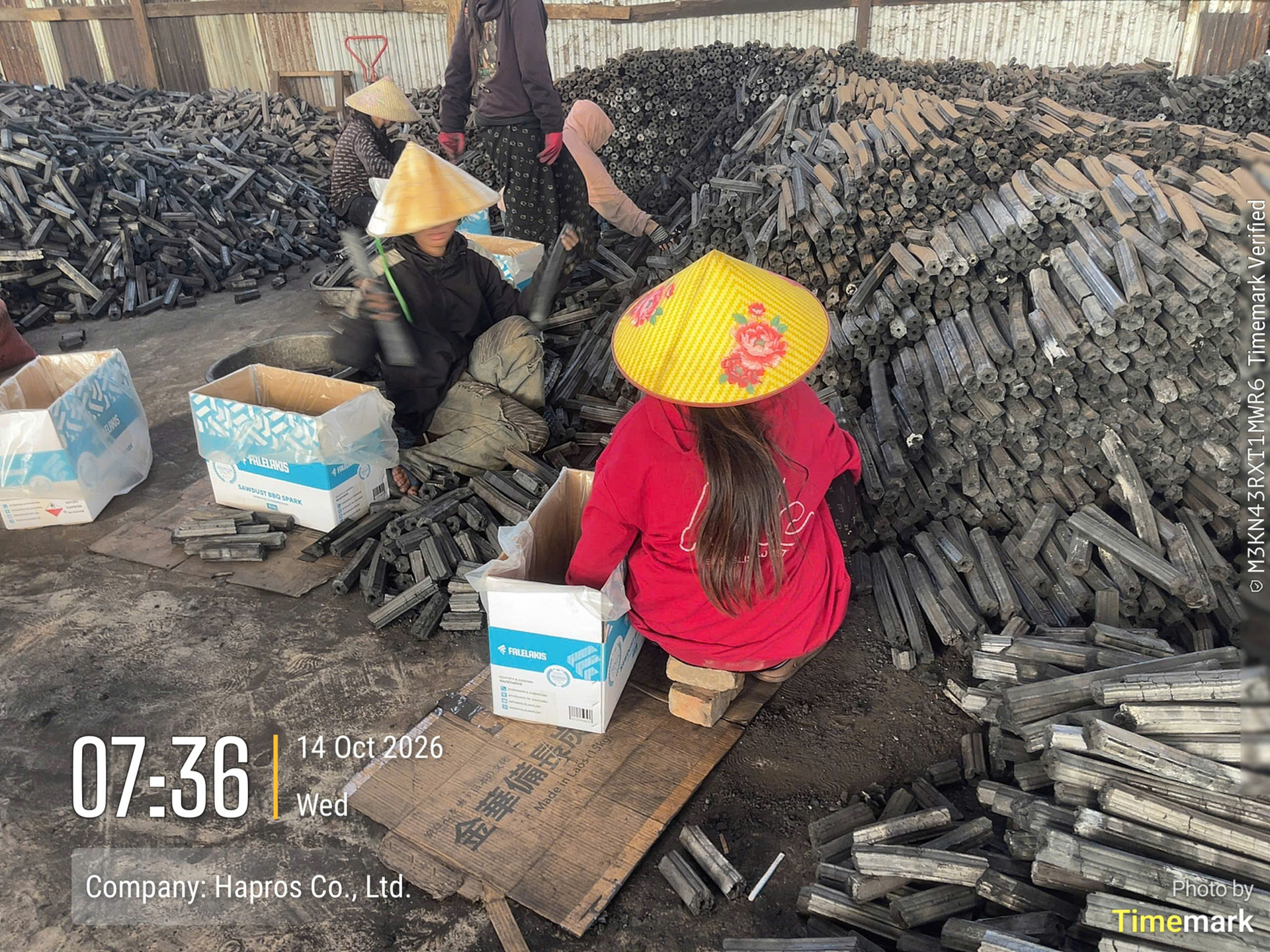
One potential advantage of producing sawdust charcoal in Laos is access to locally available wood-processing residues.
Using suitable sawdust as a raw material may help manufacturers reduce their dependence on more expensive raw materials, such as solid wood purchased specifically for charcoal production.
Other factors that may influence production costs include:
Local raw material availability and purchasing costs.
Labor and electricity expenses.
Carbonization technology and production efficiency.
Product yield and the percentage of charcoal meeting quality standards.
Packaging, inland transportation, and export logistics.
These factors can create opportunities for competitive production costs. However, actual costs vary between factories, and a lower raw material cost does not automatically translate into a lower export price.
For international buyers, the most important consideration is the overall value of the product, including quality consistency, usable burning time, packaging, and delivery costs.
1.3. An Export Framework for Sawdust Charcoal
Laos has official regulations addressing wood processing and the export of wood-related products. The Lao Trade Portal identifies sawdust briquettes and pellets as processed products made from sawdust and other residues from wood-processing factories.
The regulations also establish requirements concerning raw material sources and export eligibility. Buyers should therefore verify that the specific product, factory, raw materials, and export documentation comply with the applicable rules before placing an order.
This is particularly important when sourcing charcoal internationally, as product classification and export requirements may differ according to the production process and the type of charcoal being shipped.
For buyers, working with a supplier that understands these requirements can help reduce avoidable documentation and logistics risks.
2. Quality Characteristics of Sawdust Charcoal from Laos
The quality of Laos sawdust charcoal depends on several factors, including the type of wood used, raw material moisture, carbonization conditions, and the consistency of the production process.
Hardwood sawdust can be a suitable raw material for producing charcoal briquettes. However, the final product's performance must be assessed through actual testing rather than determined by wood type alone.
2.1. Hardwood Sawdust as a Raw Material
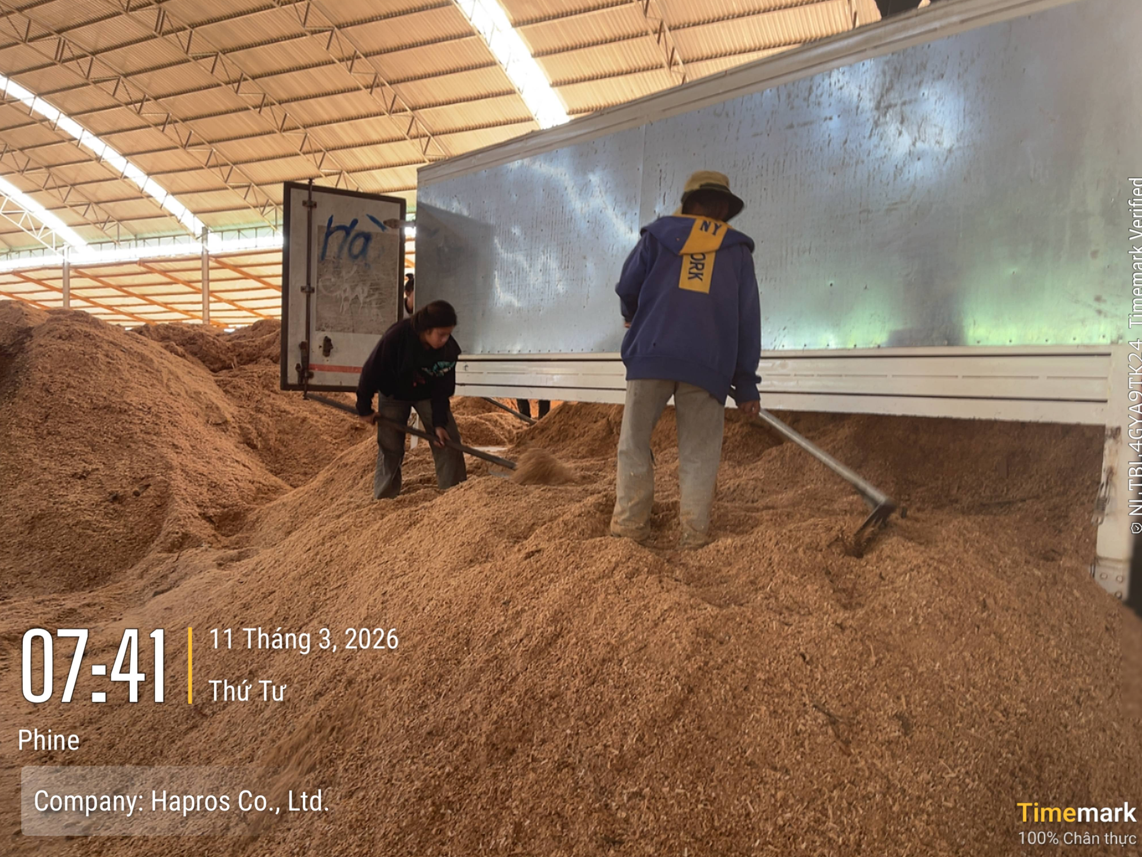
Hardwood sawdust can be processed into compact charcoal briquettes designed for commercial grilling applications.
The manufacturing process generally involves preparing the raw material, producing compressed briquettes or suitable intermediate products, and carbonizing them under controlled conditions.
Proper control of these stages is important because variations in raw material moisture, briquette density, and carbonization conditions can affect the final product.
For buyers, the key question is not simply whether the charcoal is made from hardwood sawdust, but whether the finished product consistently meets the required performance standards.
You may want to read: Why Raw Material Determines Sawdust Charcoal Quality
2.2. Key Quality Characteristics
Depending on the product specification and verified test results, Laos sawdust charcoal can offer several characteristics that are valuable to professional users.
High calorific value
A calorific value above 7,000 kcal/kg is a target specification for the product discussed in this article. High energy content can help support effective grilling performance. Buyers should confirm the actual value through a laboratory report and check whether it is reported on an as-received or dry basis.
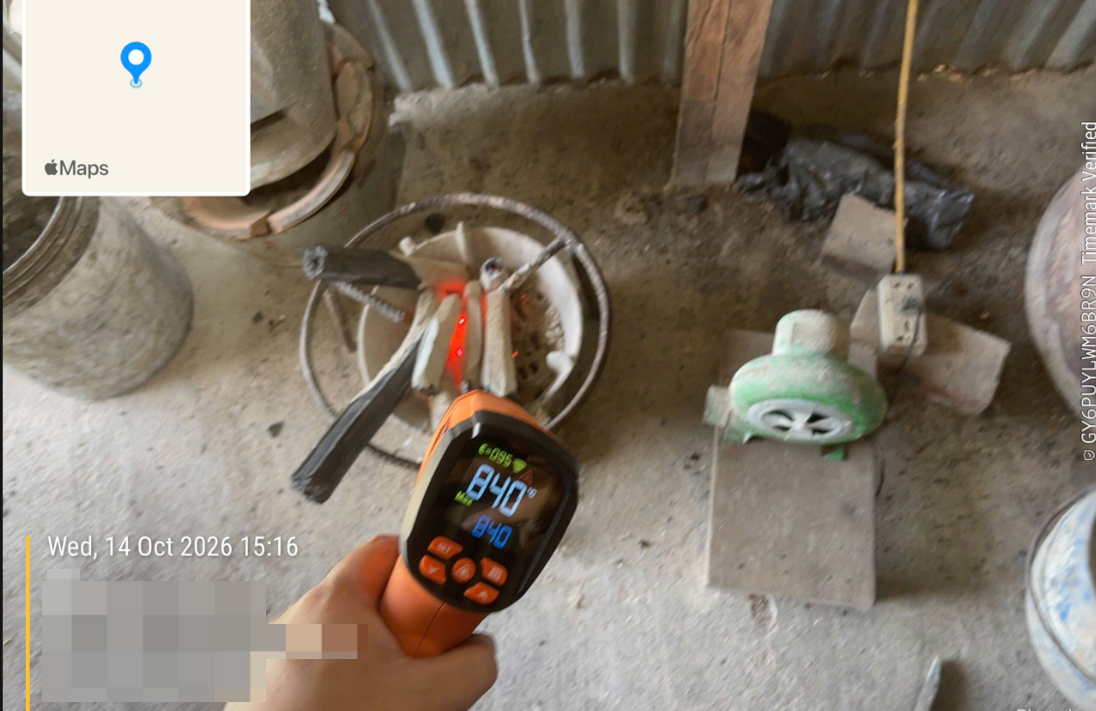
Long burning time
A burning time of more than six hours can be advantageous for barbecue restaurants and other commercial users that require sustained heat.
However, burning time depends on briquette dimensions, airflow, ignition conditions, and operating practices. Buyers should compare products under similar test conditions.
Light-colored ash
White or light-colored ash is a desirable visual characteristic for some charcoal buyers. Nevertheless, ash color alone does not establish the product's overall quality. Total ash content and other relevant parameters should also be considered.
Consistent shape and density
Uniform briquette dimensions and adequate mechanical strength can help improve handling, packaging, and product consistency during use.
For professional buyers, a complete quality assessment should consider calorific value, fixed carbon, moisture, ash content, burning performance, and mechanical strength where applicable.
2.3. The Main Challenge: Maintaining Consistent Quality Between Batches
Although Laos has potential as a production location, buyers should not assume that every factory can deliver the same quality.
Some manufacturers have relatively limited experience in producing export-grade sawdust charcoal. Newer production operations may still be refining their carbonization processes, quality standards, and sorting procedures.
This can create several challenges:
Variations in burning time between batches.
Differences in density, dimensions, and mechanical strength.
Inconsistent carbon content or calorific value.
Insufficient separation between products that meet the required specifications and those that do not.
Sorting is particularly important when a factory produces multiple grades of charcoal.
Even when a factory can produce high-quality charcoal, inadequate sorting may result in products with different performance characteristics being packed together. This can lead to customer complaints and make it difficult for importers to maintain consistent product quality in their own markets.
For this reason, buyers should evaluate not only a factory's production capabilities but also its experience, quality-control procedures, and ability to maintain consistent standards across commercial shipments.
You may want to read: How to Evaluate Vietnam Sawdust Charcoal Quality
3. Important Considerations When Buying Sawdust Charcoal from Laos
Choosing a reliable supplier is essential when importing sawdust charcoal. Buyers should pay attention to both product quality and the supplier's ability to manage production and export operations.
3.1. Check the Factory's Sorting and Quality-Control Procedures
Product sorting is one of the most important stages in preparing export-grade sawdust charcoal.
Buyers should ask suppliers how they separate different quality grades and what criteria they use to determine whether a product meets the agreed specifications.
Useful checks include:
Confirming the approved product sample before production.
Establishing written quality specifications and acceptable tolerances.
Inspecting products from different cartons rather than relying on a few selected pieces.
Checking packaging and product condition before container loading.
Keeping photographs, inspection records, and relevant test reports.
For large orders, an independent pre-shipment inspection may provide additional assurance.
The objective is to ensure that the charcoal delivered matches the product that the buyer approved, rather than relying solely on verbal promises or sample quality.
3.2. Do Not Rely Only on Samples or Supplier Claims
A sample is useful for evaluating a product, but it cannot guarantee that an entire shipment will meet the same standard.
Before confirming an order, buyers should agree with the supplier on the key quality parameters and how they will be measured.
For example, if a buyer requires a burning time of more than six hours, the parties should establish the testing conditions and acceptance criteria. The same principle applies to calorific value, moisture, ash content, and other technical specifications.
Where appropriate, laboratory testing can help verify the agreed parameters.
A clear inspection procedure also helps both parties resolve quality disputes more objectively.
3.3. Reduce Risks When Dealing Directly with Factories
Direct purchasing can provide buyers with closer contact with manufacturers, but it may also require more time and resources to supervise production from another country.
Potential risks include:
Delivered products differing from the approved sample.
Inconsistent sorting or mixing of different grades.
Incomplete or inaccurate quality documentation.
Delays caused by production or packaging problems.
Difficulties resolving disputes when acceptance criteria are unclear.
These risks are not unique to Laos. They can arise in any international sourcing relationship where production supervision and quality control are insufficient.
Buyers should verify the supplier's business information, clarify contractual responsibilities, document product specifications, and confirm the export documentation required for the destination market.
3.4. Why Work with an Experienced Export Trading Company?
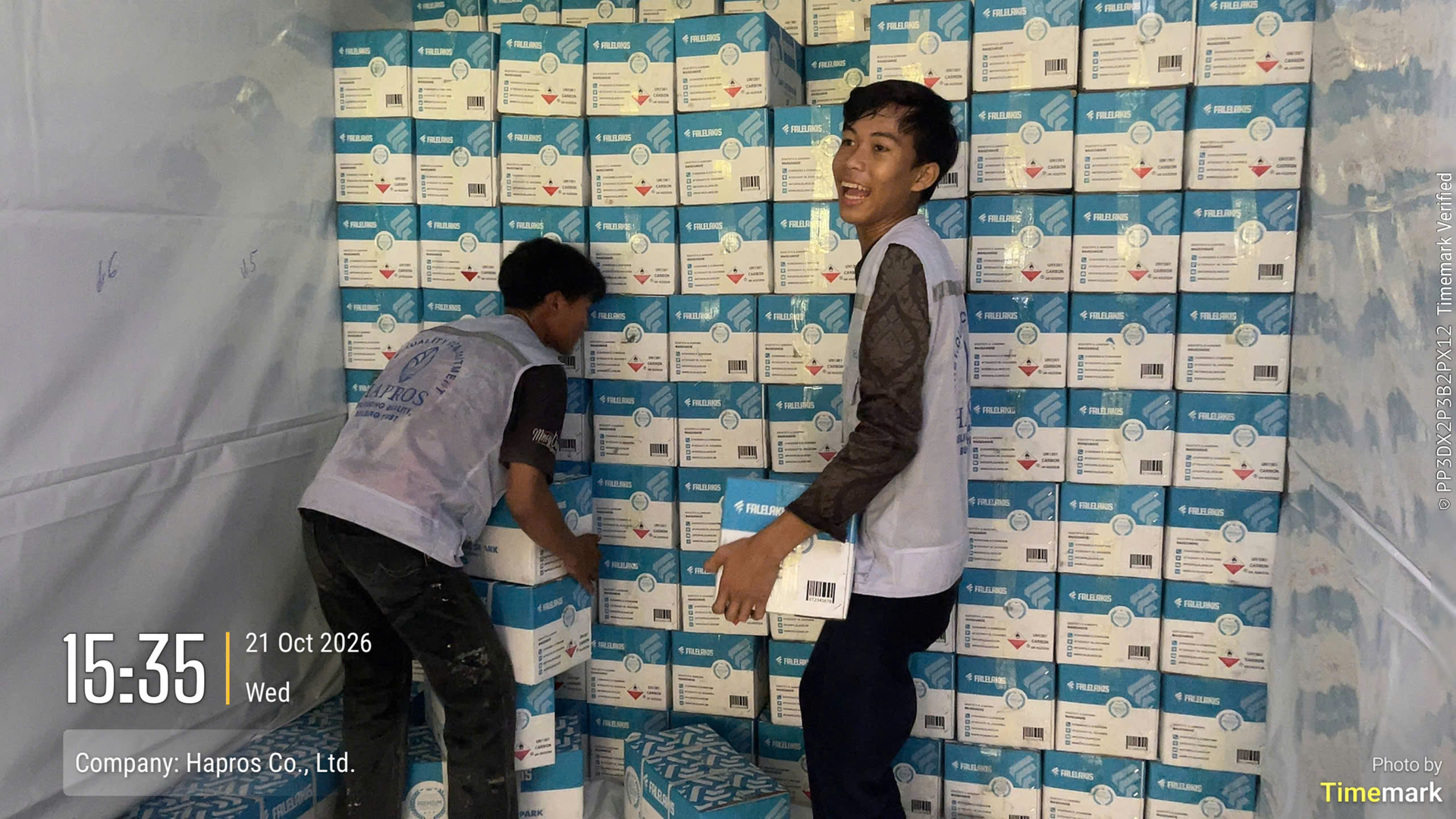
An experienced export trading company can provide value beyond simply connecting buyers with factories.
Depending on its actual capabilities, a trading company can coordinate production, monitor sorting, check product specifications, arrange packaging inspections, and support export documentation and logistics.
This can be especially useful for overseas buyers who cannot regularly visit the production site.
The key is to choose a trading partner that actively participates in quality control and clearly defines its responsibilities.
A reliable partner should be able to explain how products are inspected, how nonconforming goods are handled, and how the agreed quality standards are maintained before shipment.
4. Hapros Co., Ltd. – Your Sawdust Charcoal Supply Partner in Laos
Hapros Co., Ltd. is an export trading company working with international buyers and production partners to supply sawdust charcoal from Laos.
Hapros currently cooperates with two factories in Laos to produce sawdust charcoal for export markets.
Our approach focuses on coordinating production requirements, monitoring product sorting, and helping customers obtain charcoal that meets their agreed specifications.
4.1. Working with Two Production Partners in Laos
Cooperating with two factories gives Hapros a production network to support customer requirements and coordinate orders.
Factory selection and production planning should take into account product specifications, available capacity, packaging requirements, and the quality standards requested by each customer.
Rather than assuming that all factories produce identical products, Hapros works with its production partners to align requirements with the needs of the intended market.
4.2. Quality Control from Production to Container Loading
For export customers, quality control must extend beyond the initial production stage.
Hapros focuses on coordinating the following activities with its production partners:
Confirming product specifications before production.
Monitoring sorting and separation of charcoal grades.
Checking product appearance and packaging against the agreed requirements.
Coordinating inspections and documentation before shipment.
Communicating with buyers regarding quality expectations and order requirements.
These activities help reduce the risk of discrepancies between the approved sample and the delivered goods.
Specific quality parameters should be confirmed for each product and supported by appropriate test results where required.
4.3. Supply Solutions for Importers, Wholesalers, and HORECA Buyers
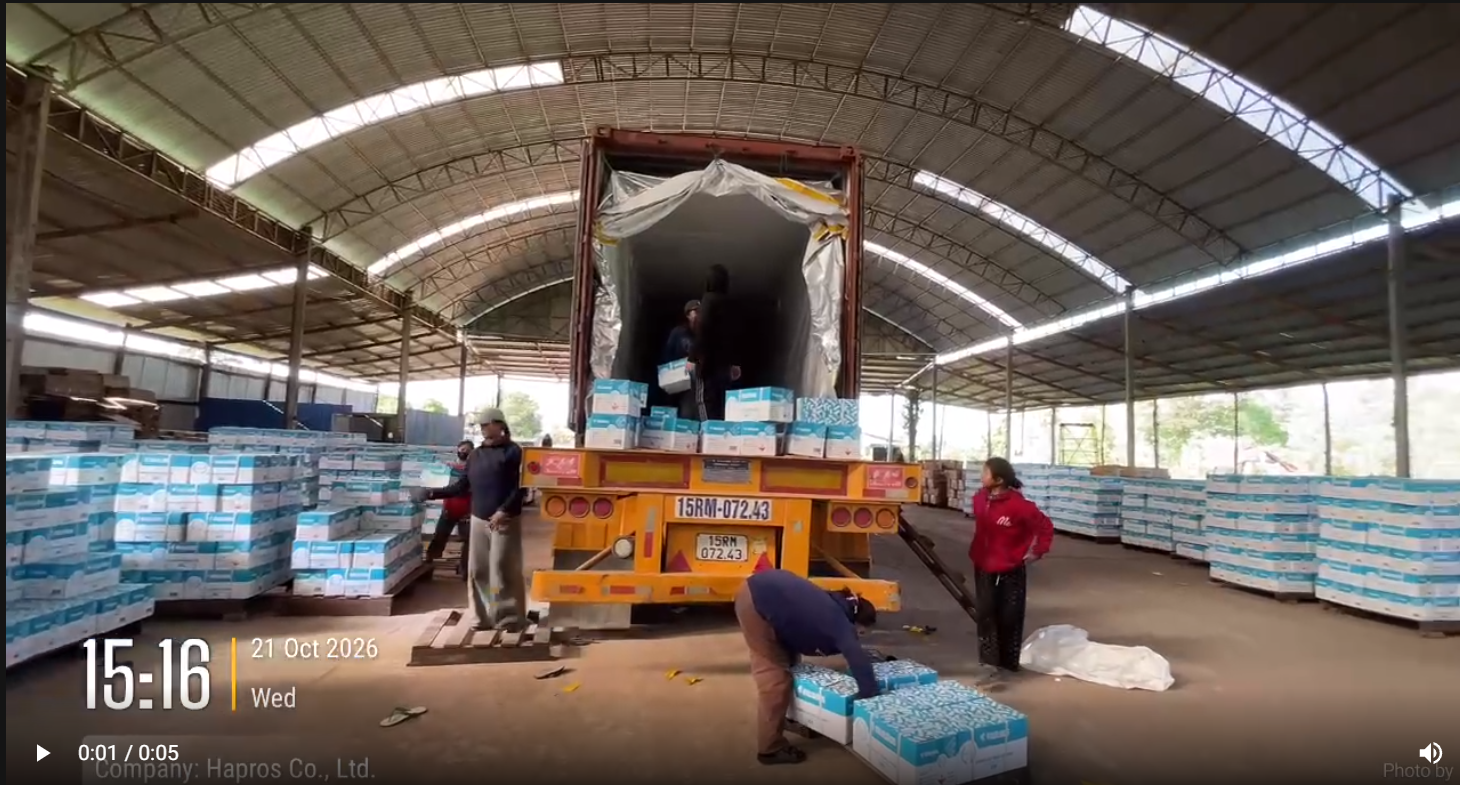
Hapros works with customers looking for sawdust charcoal for commercial grilling and distribution.
Our potential customer groups include:
Charcoal importers and wholesalers.
BBQ restaurant suppliers.
Hotels, restaurants, and catering businesses.
Private-label brands and distributors seeking customized packaging.
We can discuss product specifications, packaging options, sample arrangements, order quantities, and shipping requirements according to each customer's needs.
Our goal is to help buyers identify a suitable product and establish a more reliable sourcing process.
4.4. Contact Hapros for Sawdust Charcoal from Laos
If you are looking for a sawdust charcoal supplier in Laos, Hapros welcomes inquiries from importers, distributors, and commercial buyers.
Contact us to discuss:
Product specifications and available grades.
Calorific value and burning-time requirements.
Packaging and private-label options.
Sample requests and quality verification.
Order quantities and export shipping arrangements.
Share your destination market, required specifications, and estimated order volume so we can discuss a suitable supply solution.
Hapros Co., Ltd. – Your Partner for Sawdust Charcoal Sourcing and Export from Laos.
Visit our website: https://www.haprosvn.com
Conclusion
Laos offers potential for sawdust charcoal production through its wood-processing sector and the opportunity to turn suitable wood residues into value-added fuel products.
For international buyers, however, raw material availability and competitive production costs are only part of the decision. Product performance, consistent sorting, quality documentation, and export compliance are equally important.
By working with a supply partner that understands these requirements and actively coordinates with production facilities, buyers can make more informed sourcing decisions and reduce avoidable quality risks.
Hapros Co., Ltd. cooperates with two sawdust charcoal factories in Laos and works to connect their production capabilities with the needs of international customers.
If you are considering sourcing sawdust charcoal from Laos, contact Hapros to discuss your specifications, request samples, and explore a suitable supply arrangement.